What is HMDAVision

HMDAVision is a mortgage market intelligence platform designed to help professionals understand lending activity, borrower outcomes, and market structure using loan-level HMDA data as its foundation.
It supports strategy, compliance, and fair lending analysis by making complex mortgage data explainable, comparable, and defensible.
Trusted by industry advisors and lenders.

Data for HMDAVision

Loan-level HMDA as the analytical core

Loan-level HMDA data forms the foundation of HMDAVision, providing national coverage of mortgage applications, originations, pricing, and market share. Comparability and defensible mortgage market intelligence.

Census data for household and geographic context

Demographic and geographic context—at granular segments—to support fair lending analysis and market strategy. Uses FFIEC demographics datasets, OMB definitions for metro areas.

NMLS data

Nationwide Multistate Licensing System (NMLS) data is incorporated to compare lenders' LO productivity, tenure, and turnover. Enables comparative analytics over time.

Methodology

Built on transparent assumptions. Rich filters enable deep analysis in an instant.

What Questions Can HMDAVision Answer Instantly?

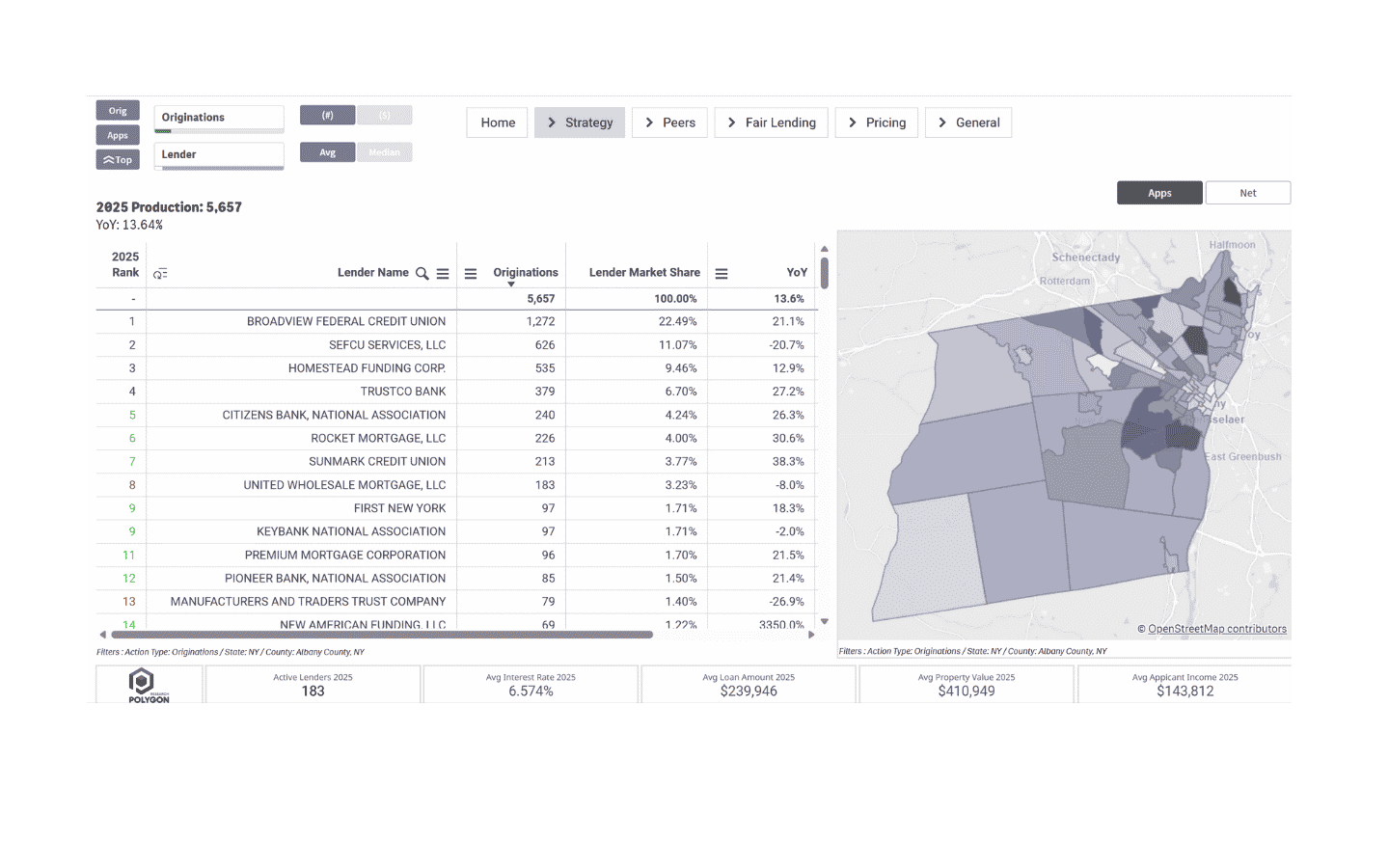
Who is borrowing—and where?

How do borrower profiles vary by geography, income, or loan type?
Where is demand shifting across markets or segments?

How are borrowers priced in the market?

How do interest rates and upfront costs compare across lenders?
Where do pricing differences appear after controlling for loan factors?

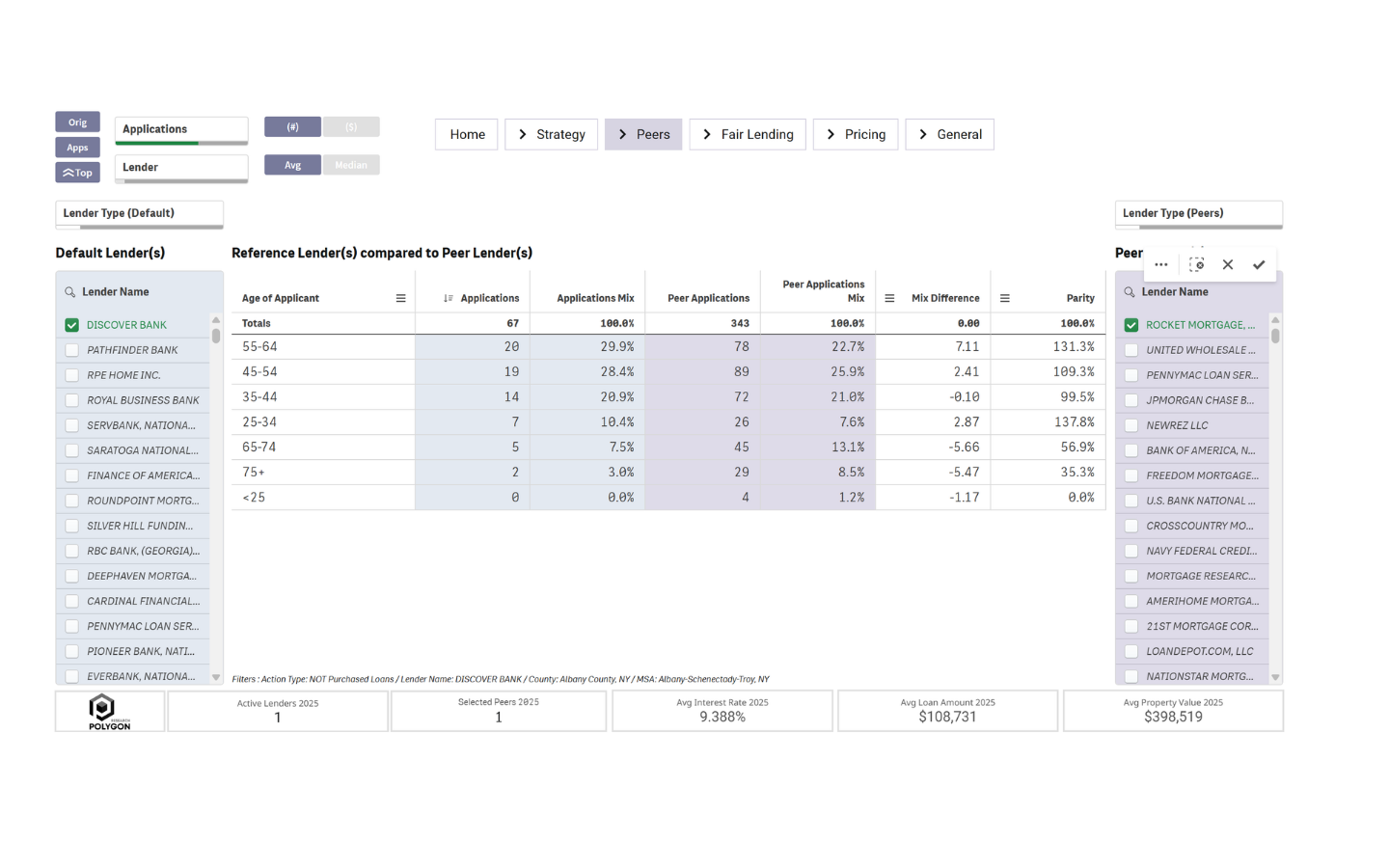
Who is competing in a given market?

Which lenders are active—and which are absent?
How does channel mix differ by geography or borrower segment?
Who are the top Non-QM lenders in your market?

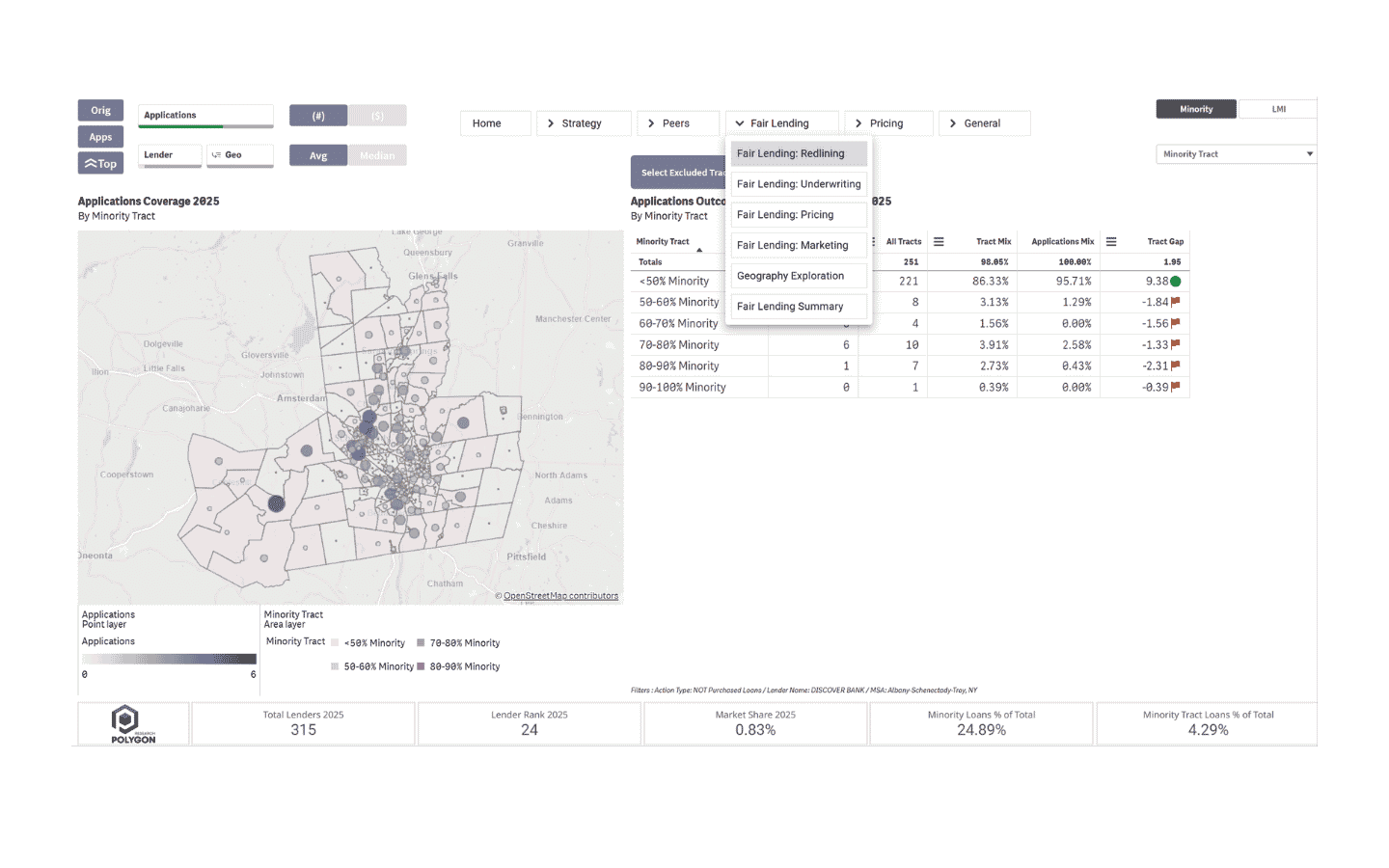
Redlining

How does our lending activity compare to peer lenders across census tracts?
Are there geographic areas with demand but limited institutional presence?
Do lending patterns differ by borrower income or neighborhood characteristics?

Underwriting

Do approval and denial outcomes vary across borrower segments?
How do approval rates differ after accounting for loan purpose and product type?
Are underwriting outcomes consistent across income or demographic groups?
Where do outcome differences warrant deeper review?

Marketing & Borrower Reach

Who are we reaching—and who are we missing?
Does marketing exposure align with borrower demand across markets?
Are certain communities underrepresented in application volume?
How does outreach align with demographic and geographic opportunity?

Frequently asked questions

About HMDAVision
What is HMDAVision?
HMDAVision is a loan-level mortgage analytics application built on HMDA data. It helps professionals analyze lending activity, borrower outcomes, pricing, competition, and fair lending signals using transparent, explainable views rather than rankings or black-box scores.
How many mortgage transactions are included in HMDAVision?
HMDAVision includes 124+ million mortgage applications and originations, based on loan-level HMDA data from 2018 through the most recent release. This scale allows for robust analysis across lenders, geographies, borrower segments, and market cycles. (Updated December 2025.)
What data sources are used in HMDAVision?
HMDAVision is built on loan-level HMDA data and enriched with Census demographic context and NMLS licensing data. These sources provide borrower, household, geographic, and institutional context while preserving transparency and regulatory familiarity.
How is HMDAVision different from the CFPB HMDA Data Browser?
The CFPB’s HMDA Data Browser is a valuable public tool for viewing and downloading HMDA data. HMDAVision builds on the same underlying HMDA Loan Application Register (LAR) data but is designed for analysis rather than lookup. It provides loan-level controls, comparative views, market segmentation, pricing and cost analysis, fair lending signal exploration, and integrated Census and NMLS context—making it easier to ask and answer real strategic and compliance questions without manually exporting and reconciling data.
What years of HMDA data does HMDAVision include?
HMDAVision includes multiple years of modern HMDA data starting in 2018, when HMDA reporting expanded in depth and usability. This allows users to measure change over time, compare market cycles, and distinguish short-term volatility from structural trends.
Does HMDAVision include loan originator (NMLS) coverage?
Yes. HMDAVision incorporates NMLS licensing data covering 350,000+ loan originators per year, beginning with the 2018 HMDA cycle through the most current HMDA release. This provides important institutional and workforce context when interpreting lending activity and outcomes.
How often is HMDAVision updated?
HMDAVision is updated monthly to capture HMDA corrections and late filings. While HMDA Loan Application Register (LAR) data is released annually—typically in March, with a stabilized snapshot in June—monthly updates ensure users are working with the most complete and accurate version of the data available.
How does HMDAVision relate to Polygon Vision?
HMDAVision is one of the core applications within the Polygon Vision suite. It can be used on its own for loan-level HMDA analysis, or alongside other Polygon Vision apps to connect borrower outcomes with demographics, market structure, and distribution strategy.
How does the HMDAVision free trial work?
The HMDAVision free trial lasts 7 days and provides access to the full application experience. Trial data is offset by one year from the paid version. You can cancel anytime during the trial to avoid being charged.
What kinds of questions can HMDAVision answer?
HMDAVision is designed for real analytical questions—such as who is borrowing, how borrowers are priced, where competition exists, and where outcome differences may warrant review. It supports redlining, underwriting, pricing, and marketing analysis using controlled, loan-level views.

See your market clearly

Instant access to trusted mortgage market intel—built on transparent data and designed to support confident decisions.
No installation required.
Access is immediate.