Mortgage Market Share, Pricing & Fair Lending Analysis.

Polygon Vision is the only one, application-level suite of market intel tools, enriched with granular NMLS, housing data, and local demographics.

HMDAVision Logo
CensusVision Logo
124584847
Number of loans analyzed
4909
Number of lenders analyzed
821
Average BPS Loan Costs
334914896
Number of population analyzed
131325888
Number of housing units analyzed
14973472
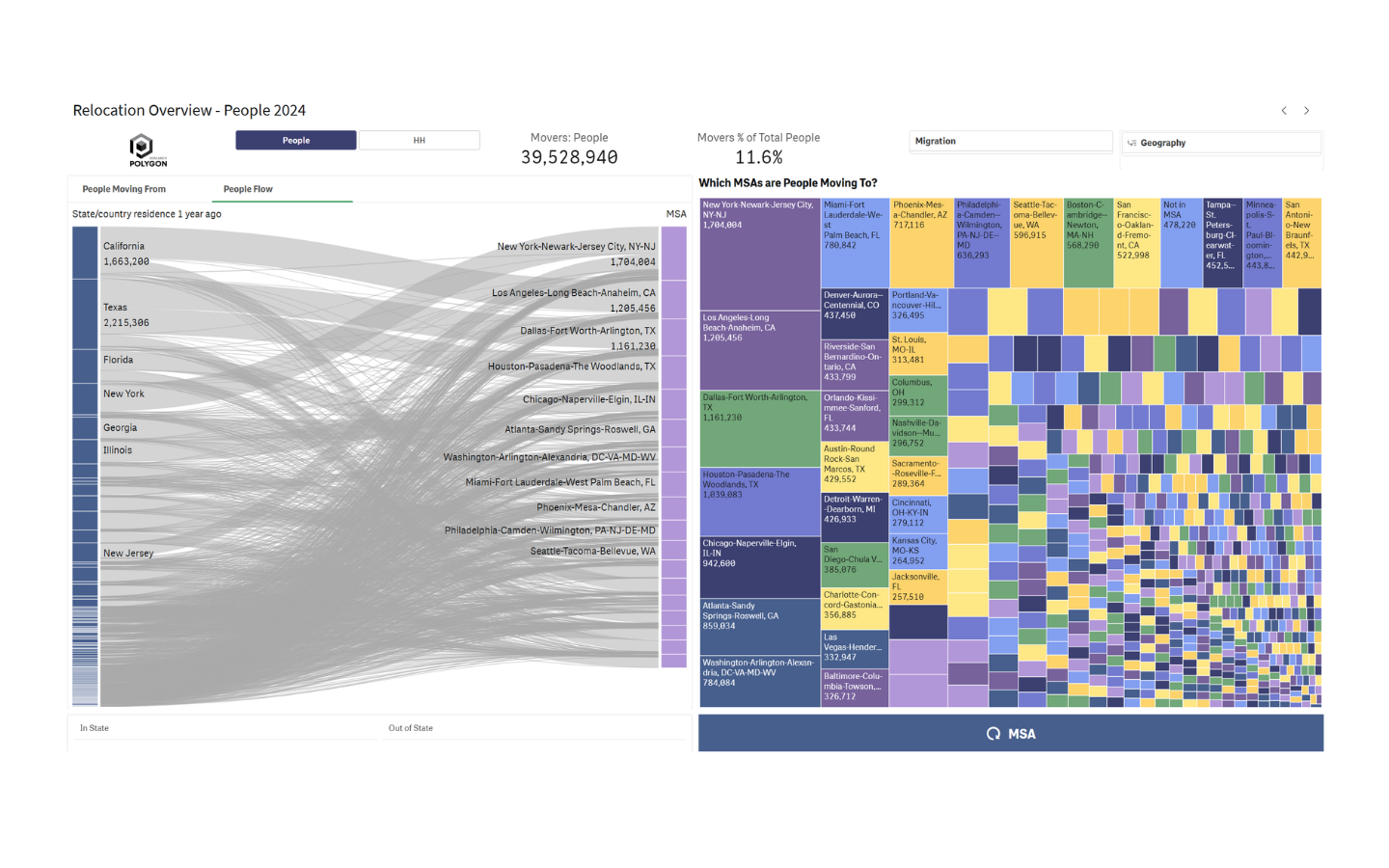
Number of HH movers

Polygon Vision equips you with a dual lens - HMDAVision and CensusVision - for unmatched market clarity.

New in HMDAVision

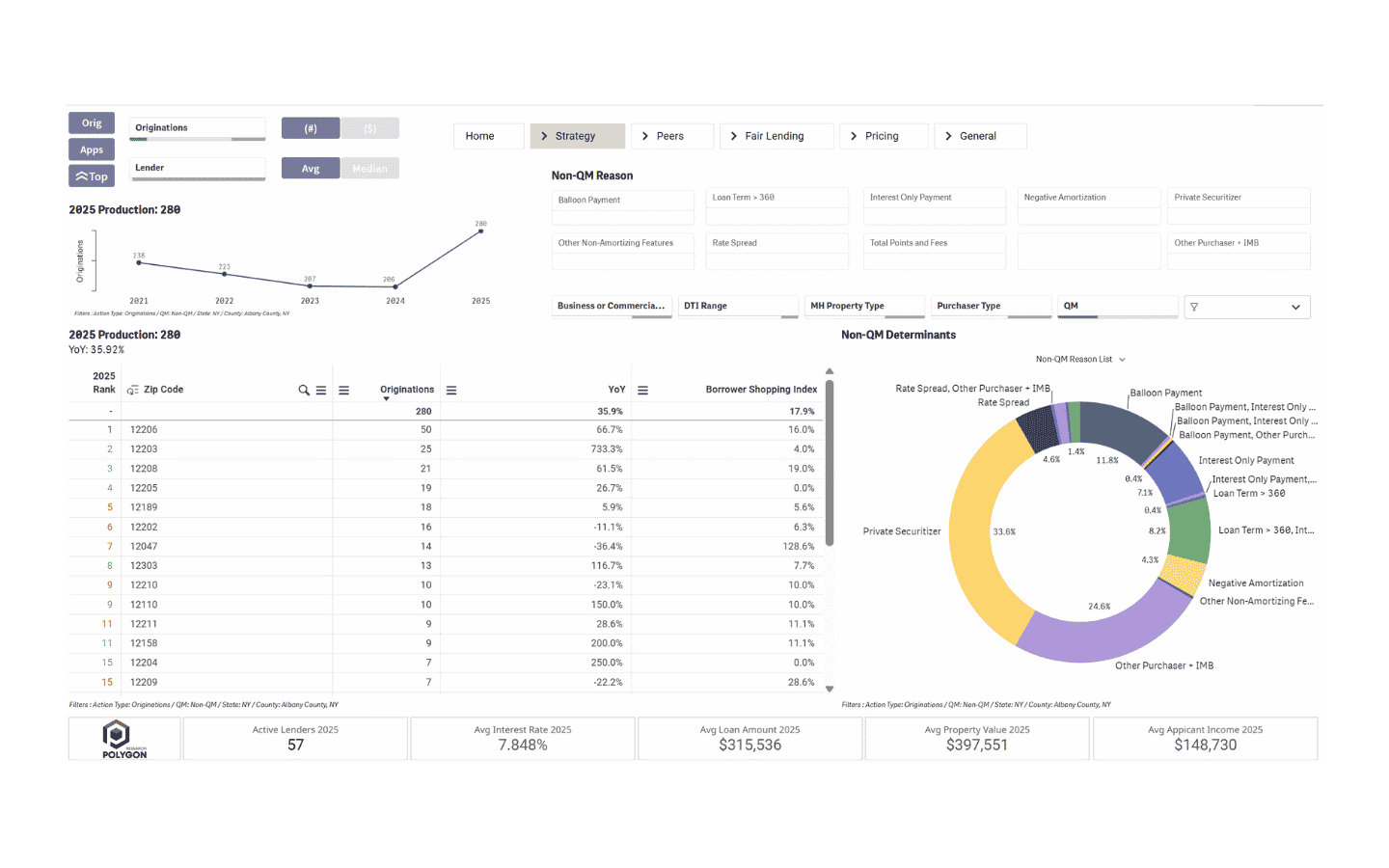
Non-QM Quantified Across 67 Million Closed Loans

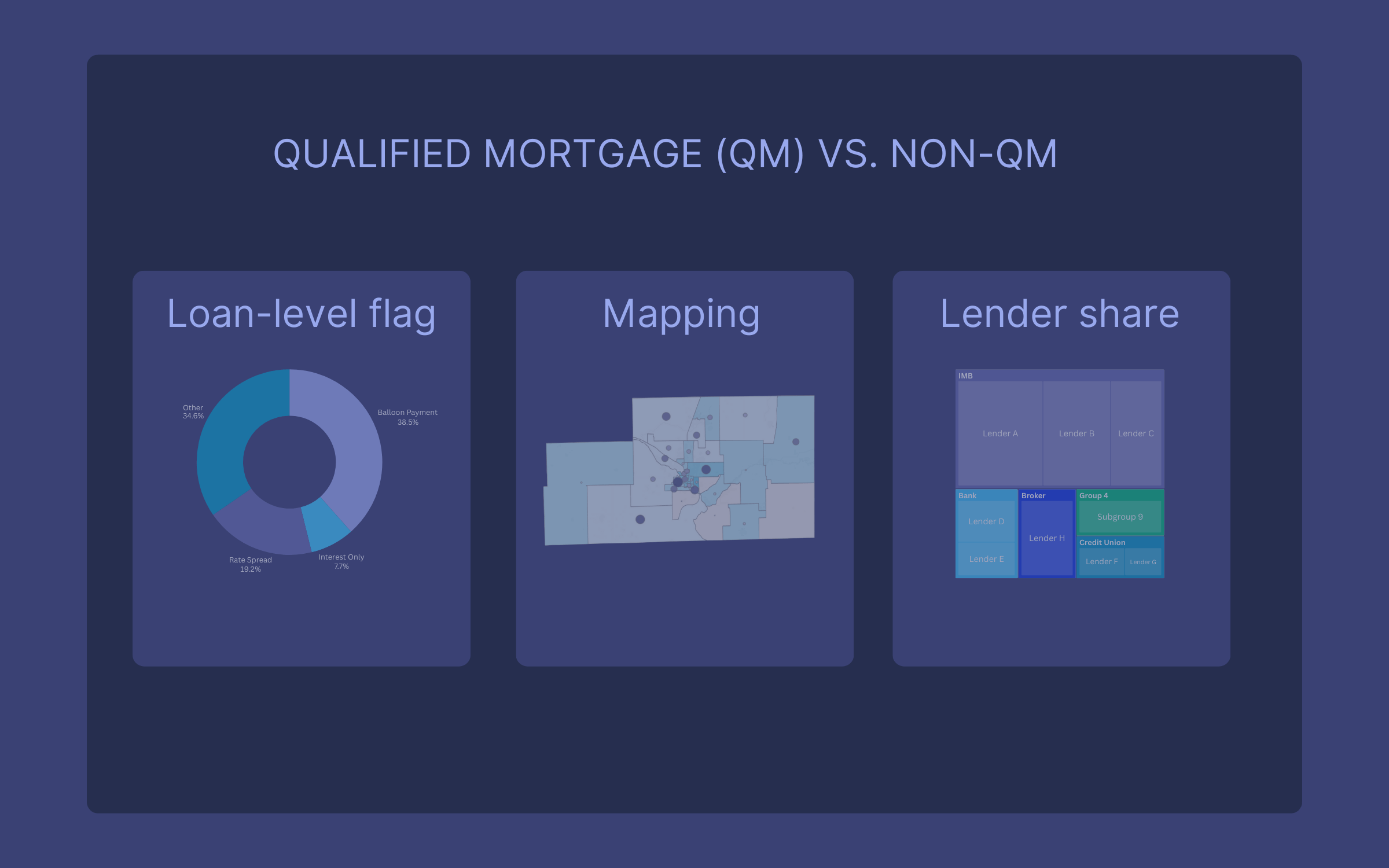
A stylized card with three use cases for using QM flag.
Magic icon

Non-QM Markets

Using the actual ATR/QM rule logic and year-specific thresholds, you can finally track the non-QM market by lender, product, channel, geography, and borrower segment - not just in headlines or securitization decks.

Chart icon

Understand Non-QM Features

Instantly see if a loan triggered Non-QM status due to pricing (rate spread), product features (IO/Balloon), or points and fees.

Pie icon

Map Opportunity and Risk

Overlay Non-QM lending patterns on census tracts, income categories, and demographic data to identify underserved markets.

Actionable insights about borrower needs

Master Your Borrower Profiles

Borrower profile card
Magic icon

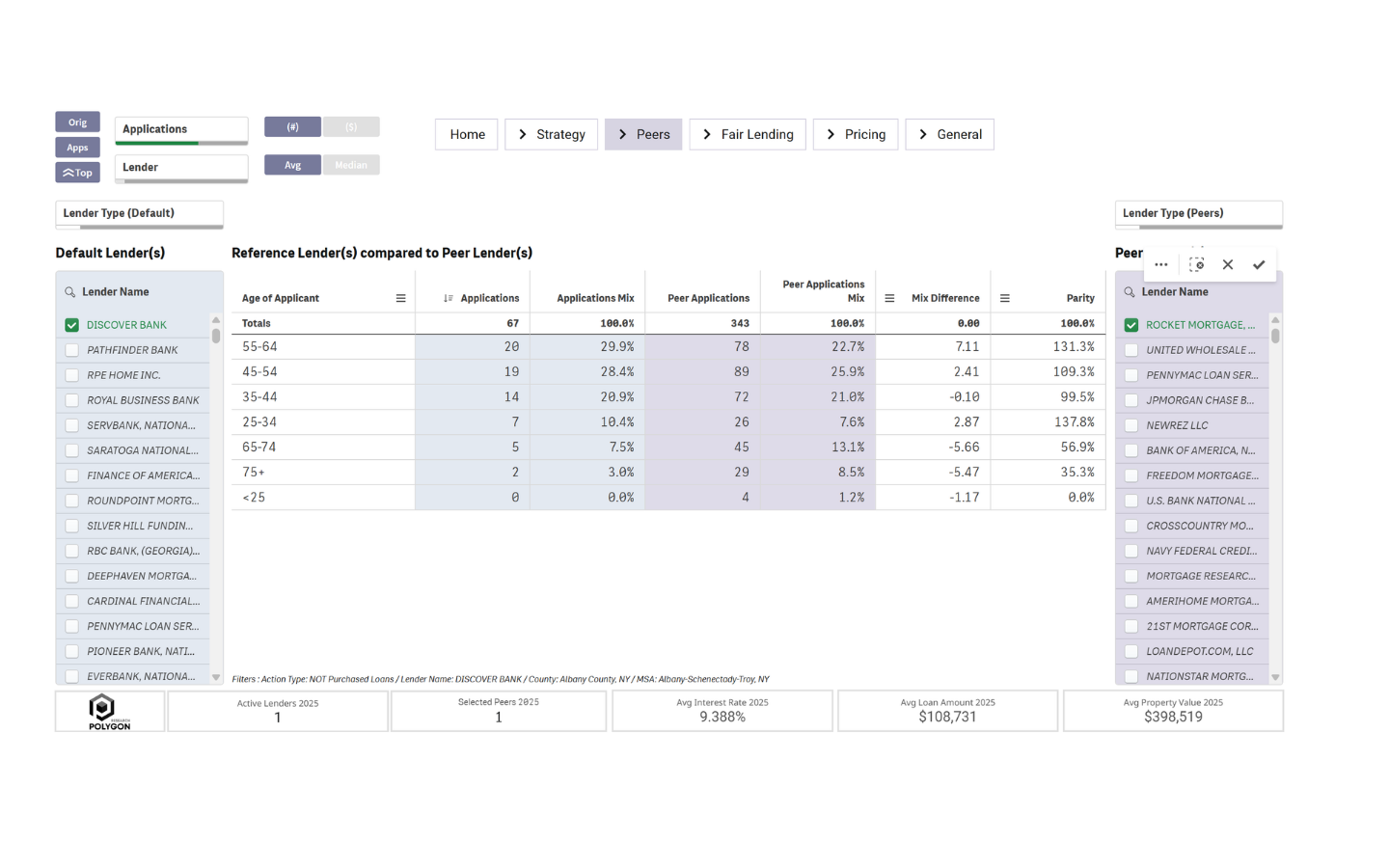
Build borrower profiles to focus market outreach

Borrowers have different needs at different stages of life. First-time home vs. Repeat home buyers. Meet your borrowers where they are.

Chart icon

Anticipate market shifts and find the pattern

Go beyond averages to spot emerging borrower patterns and align your strategy for future success.

Pie icon

Strategically focus your outreach

Leverage advanced filters to understand diverse borrower characteristics, enabling tailored communication and efficient resource allocation.

Smart sales management

Empower Your LOs. Activate Local Markets. In Minutes.

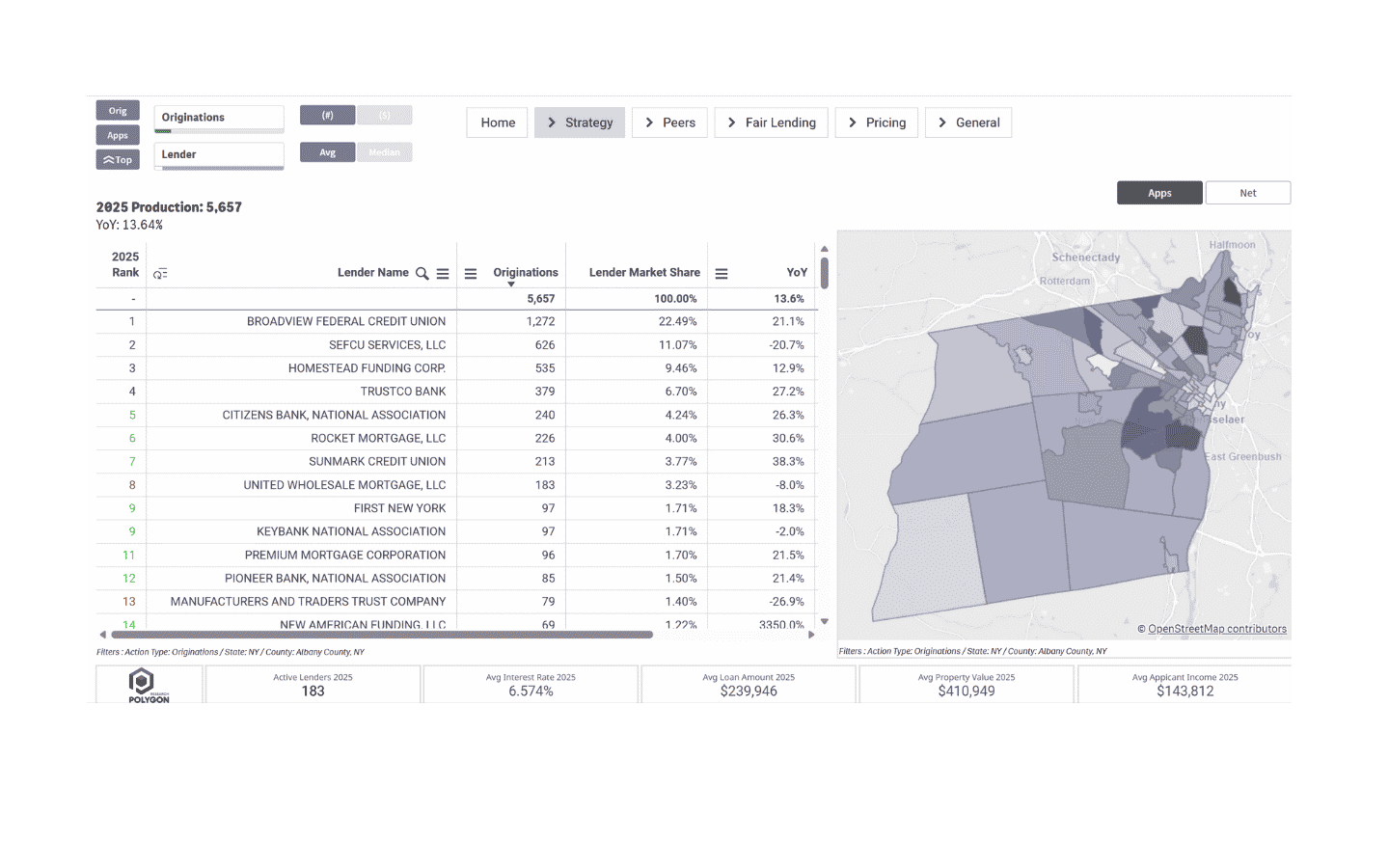
Miami-Dade County mortgage market map by zip code.
Timer icon

Pinpoint opportunities & grow partnerships

Empower LOs with hyper-local market maps to identify prime areas and foster stronger real estate connections.

Refresh icon

Build authority & expertise


Transform LOs into trusted advisors with irrefutable, data-backed insights from HMDAVision, eliminating guesswork.

Panel icon

Streamline presentations & save resources

Deliver instant, presentation-ready market insights, equipping LOs without the need for extensive data science teams.

Compliant growth

Scan for fair lending gaps and find opportunities

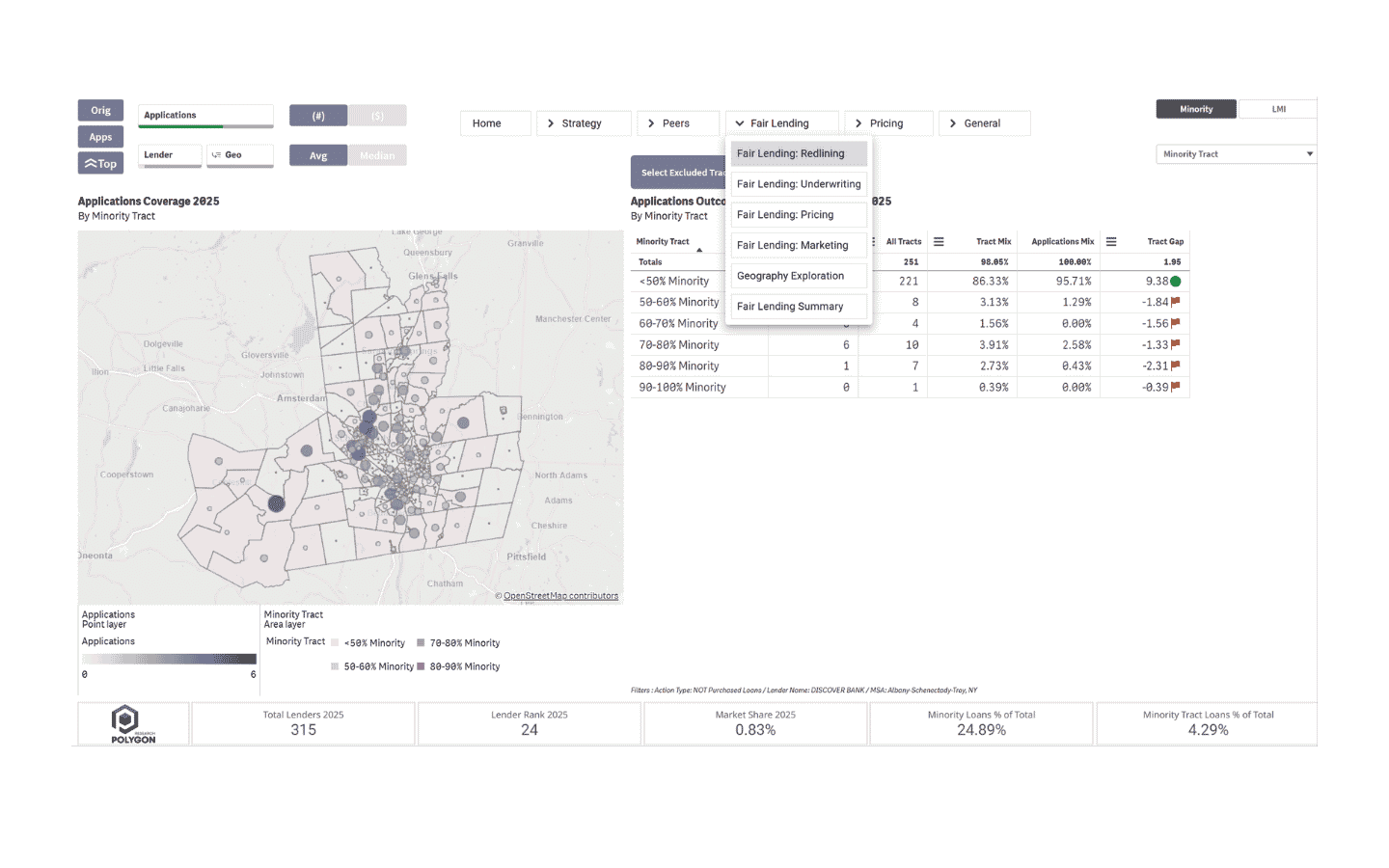
Birmingham AL map of mortgage originations by majority-minority census tract (MMCT)
Timer icon

Mortgage originations map by MMCT

Instantly scan your market for any gaps in originations by mapping and calculating the results simultaneously. Avoid redlining risk.

Refresh icon

Scan for underwriting risk

Instantly compare approval and denial rate between protected groups and non-protected class to spot any disparities. Understand how your result compares to market and peers.

Panel icon

Scan for other fair lending risks

Map your originations or applications by area demographics and analyze your competitors patterns. Find opportunities in underserved markets.

Frequently asked questions

About Polygon Vision
What is Polygon Vision?
Polygon Vision is a mortgage market intelligence platform built to answer strategic questions instantly and with clarity. It unifies housing demand and demographics with mortgage credit outcomes, lending activity, and local competition—so teams can explain what is happening in their markets and tune strategy as conditions shift.
What kinds of questions can Polygon Vision answer?
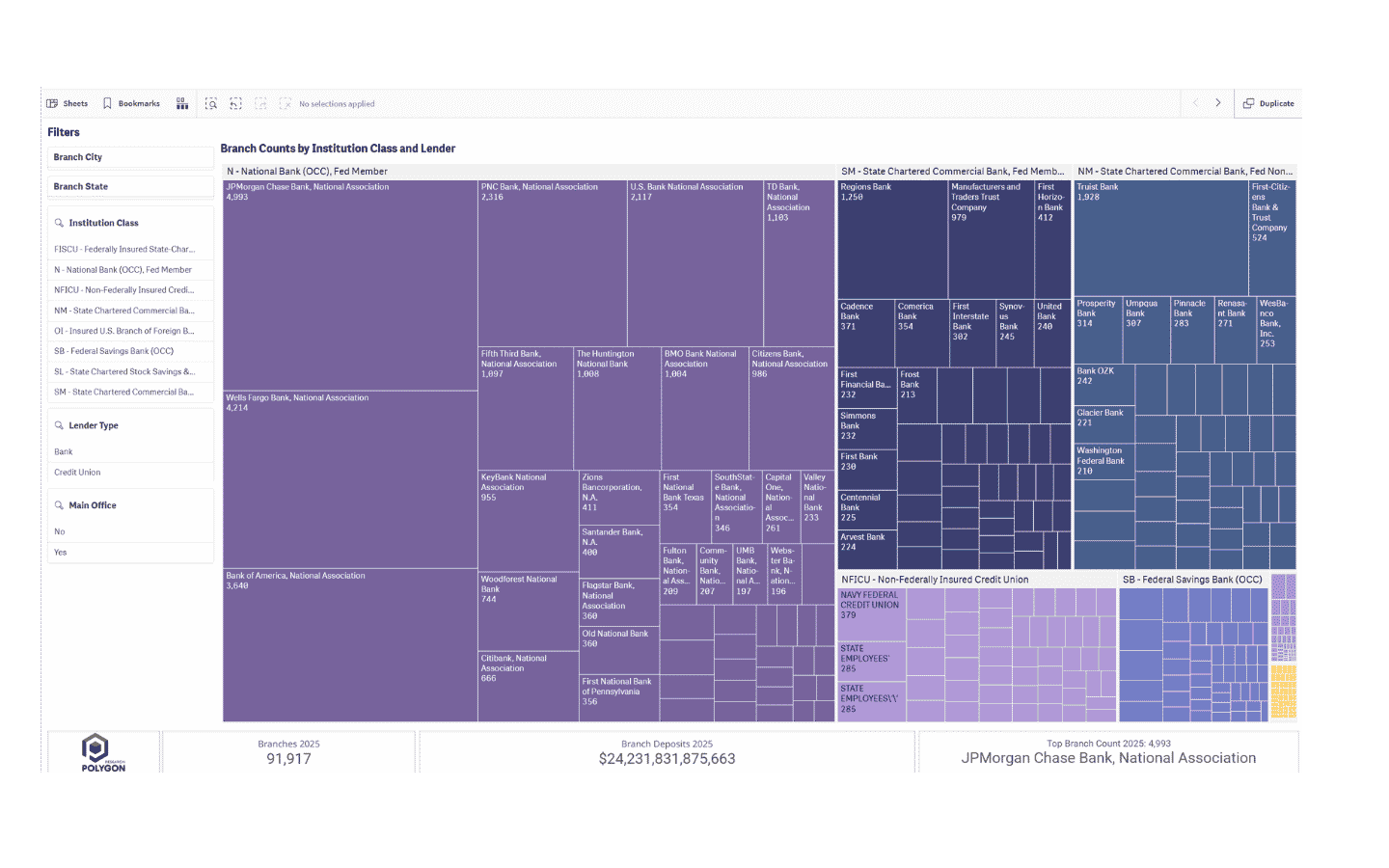
Polygon Vision is designed for real strategic questions, not just rankings. It helps you connect (1) housing and demographics (demand), (2) loan-level mortgage outcomes (credit availability), (3) fair lending and credit access signals, (4) MLO workforce dynamics like tenure, turnover, and productivity, and (5) branch presence and location—so you can see how market structure, distribution, and performance fit together.
How many years of HMDA data does Polygon Vision cover?
Polygon Vision includes multiple years of modern HMDA, covering every year since 2018—when HMDA expanded in depth and usability for market analysis. That multi-year coverage allows you to measure change over time, compare cycles, and separate one-off volatility from real structural shifts in borrowers, pricing, and credit access. This allows also for accurate local, contextual, and accurate market forecasts.
How large is Polygon Vision’s dataset?
Polygon Vision is built on loan-level microdata at national scale. Our HMDA component includes 124+ million mortgage applications since 2018, allowing analysis across lenders, geographies, borrower segments, and product types. The platform also integrates branch-level, people-level, and household-level context so insights are not just “what happened,” but “why it happened here.”
What data is included in Polygon Vision?
Polygon Vision blends major public and regulatory datasets into one consistent analytical layer. That includes HMDA (loan/application outcomes), Census and ACS (demographics and housing context), NMLS (MLO workforce and lender licensing context), and branch location data for understanding service presence. We are transparent about data definitions and timing so users can interpret results responsibly.
What does Polygon Vision include?
Polygon Vision includes three integrated apps—HMDAVision, CensusVision, and BranchVision—designed to work together. This lets you move from market demand and demographics, to loan-level outcomes and pricing, to branch presence and competitive coverage without switching tools or reconciling inconsistent definitions.
Who is Polygon Vision for?
Polygon Vision is used by banks, credit unions, independent lenders, fintechs, and advisors who need a reliable read on market structure and change. It is especially valuable for strategy, marketing, compliance, product, and executive teams that want to think clearly with data and align decisions across departments.
Is Polygon Vision easy to use if you’re not technical?
Yes. Polygon Vision is built for non-technical users who need answers, not code. You can filter, compare, and export results through intuitive dashboards. Because the platform is built around explainable concepts (not black-box outputs), it also helps teams build stronger data literacy over time.
How is Polygon Vision different from rankings, lead lists, or static reports?
Polygon Vision is built for explanation and decision-making. Rankings may tell you “who is #1,” and lead lists may tell you “who to call,” but neither explains why markets are shifting or what strategy should change. Polygon Vision helps teams test hypotheses, control for key variables, and build a narrative they can defend internally and externally.
How does the Polygon Vision free trial work?
The Polygon Vision free trial lasts 7 days and unlocks the full product experience. A credit card is required to start the trial, but you will not be charged if you cancel within the trial window. Trial data is offset by one year from the paid version; upgrading switches you to the most current dataset available for your tier.
What is HMDAVision?
HMDAVision is a loan-level mortgage analytics application built on HMDA data. It helps professionals analyze lending activity, borrower outcomes, pricing, competition, and fair lending signals using transparent, explainable views rather than rankings or black-box scores.
How many mortgage transactions are included in HMDAVision?
HMDAVision includes 124+ million mortgage applications and originations, based on loan-level HMDA data from 2018 through the most recent release. This scale allows for robust analysis across lenders, geographies, borrower segments, and market cycles. (Updated December 2025.)
What data sources are used in HMDAVision?
HMDAVision is built on loan-level HMDA data and enriched with Census demographic context and NMLS licensing data. These sources provide borrower, household, geographic, and institutional context while preserving transparency and regulatory familiarity.
How is HMDAVision different from the CFPB HMDA Data Browser?
The CFPB’s HMDA Data Browser is a valuable public tool for viewing and downloading HMDA data. HMDAVision builds on the same underlying HMDA Loan Application Register (LAR) data but is designed for analysis rather than lookup. It provides loan-level controls, comparative views, market segmentation, pricing and cost analysis, fair lending signal exploration, and integrated Census and NMLS context—making it easier to ask and answer real strategic and compliance questions without manually exporting and reconciling data.
What years of HMDA data does HMDAVision include?
HMDAVision includes multiple years of modern HMDA data starting in 2018, when HMDA reporting expanded in depth and usability. This allows users to measure change over time, compare market cycles, and distinguish short-term volatility from structural trends.
Does HMDAVision include loan originator (NMLS) coverage?
Yes. HMDAVision incorporates NMLS licensing data covering 350,000+ loan originators per year, beginning with the 2018 HMDA cycle through the most current HMDA release. This provides important institutional and workforce context when interpreting lending activity and outcomes.
How often is HMDAVision updated?
HMDAVision is updated monthly to capture HMDA corrections and late filings. While HMDA Loan Application Register (LAR) data is released annually—typically in March, with a stabilized snapshot in June—monthly updates ensure users are working with the most complete and accurate version of the data available.
How does HMDAVision relate to Polygon Vision?
HMDAVision is one of the core applications within the Polygon Vision suite. It can be used on its own for loan-level HMDA analysis, or alongside other Polygon Vision apps to connect borrower outcomes with demographics, market structure, and distribution strategy.
How does the HMDAVision free trial work?
The HMDAVision free trial lasts 7 days and provides access to the full application experience. Trial data is offset by one year from the paid version. You can cancel anytime during the trial to avoid being charged.
What kinds of questions can HMDAVision answer?
HMDAVision is designed for real analytical questions—such as who is borrowing, how borrowers are priced, where competition exists, and where outcome differences may warrant review. It supports redlining, underwriting, pricing, and marketing analysis using controlled, loan-level views.
What is CensusVision?
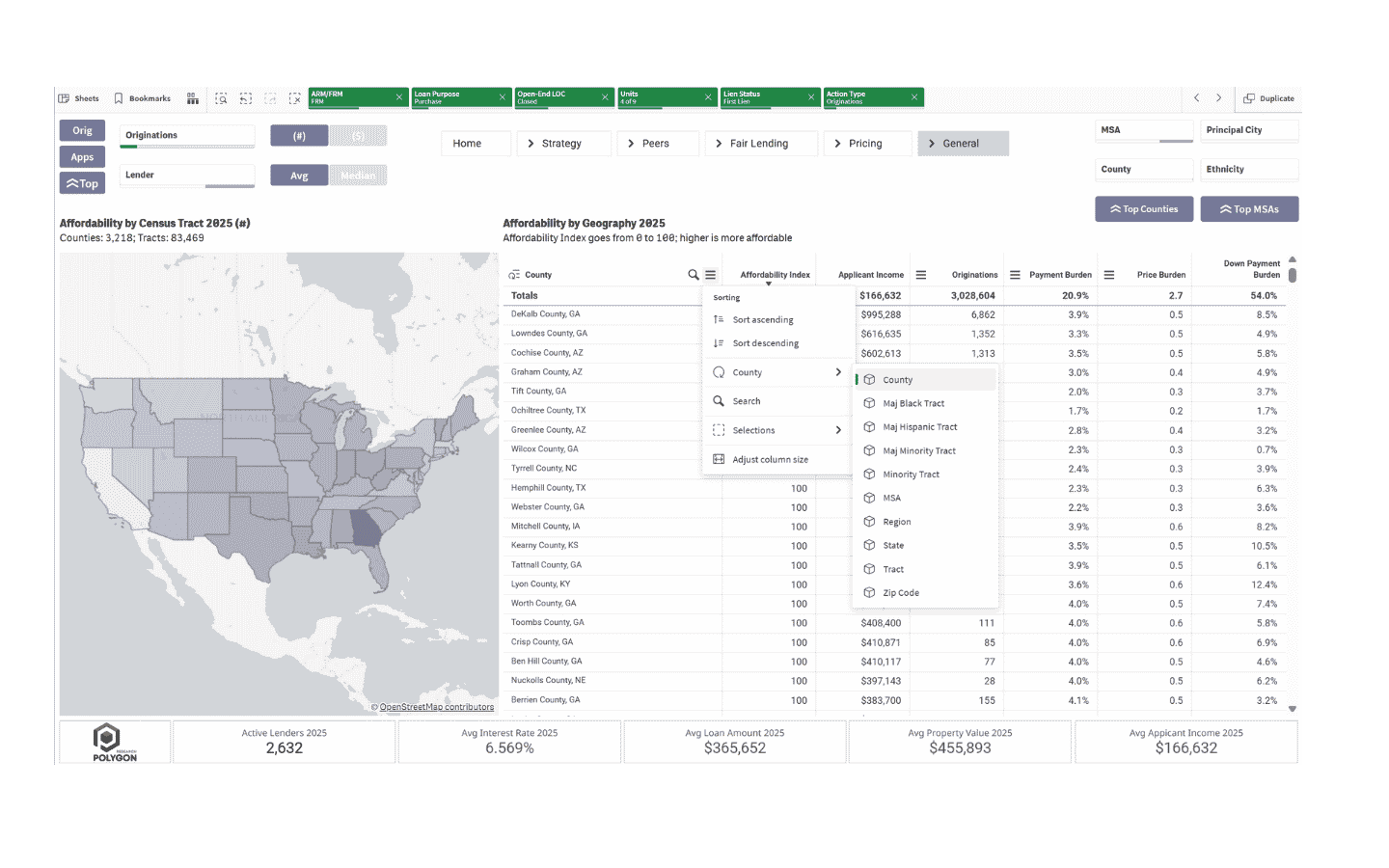
CensusVision is a community intelligence platform built on five years of ACS PUMS microdata. It helps lenders, nonprofits, and public agencies understand housing demand, affordability, demographics, and population dynamics beyond mortgage activity.
What data sources are used in CensusVision?
CensusVision is built on American Community Survey (ACS) 1-Year PUMS microdata from iPUMS USA, using a rolling five-year window to support stable, granular community analysis.
How does CensusVision help define total addressable markets?
CensusVision measures population, households, income, affordability, and housing characteristics to estimate true housing demand—before credit decisions occur—helping teams define the real size and structure of their market.
What kinds of questions can CensusVision answer?
CensusVision answers questions about who lives in a community, how households form, what housing they occupy, what they can afford, and where unmet demand or structural barriers exist.
How is CensusVision different from HMDA-based tools?
HMDA-based tools focus on mortgage applications and outcomes. CensusVision focuses on the underlying population and housing stock—providing context on demand, affordability, and demographics before lending occurs.
How often is CensusVision updated?
CensusVision is updated annually as new ACS microdata becomes available, maintaining a rolling five-year window to balance timeliness with statistical stability.
How is CensusVision different from data.census.gov?
data.census.gov is a general-purpose portal for accessing Census Bureau tables and reports across many policy domains. CensusVision is purpose-built for housing and housing finance use cases. It works directly with ACS PUMS microdata curated specifically for housing analysis, uses multiple years of data for trend analysis and forecasting, and provides interactive exploration designed around affordability, tenure, housing demand, and community context. CensusVision is built on microdata accessed via iPUMS USA, enabling analysis that is not possible through summary tables alone.
How is CensusVision different from HMDAVision?
CensusVision and HMDAVision answer different but complementary questions. CensusVision is built on survey-based, self-reported Census microdata and is designed to understand communities, affordability, population characteristics, and housing demand—what exists before a mortgage application. HMDAVision is built on loan-level HMDA transaction data reported by lenders under Regulation C, with strict reporting standards and regulatory guardrails, and focuses on actual mortgage applications, originations, pricing, and outcomes. Together, they allow users to connect housing demand and community context with observed mortgage credit outcomes.

Ready to get started?

Take the first step to growing your loan production
Start Your Free Trial