S3 E2
Bank Mortgage Strategy & Growth
Show Notes
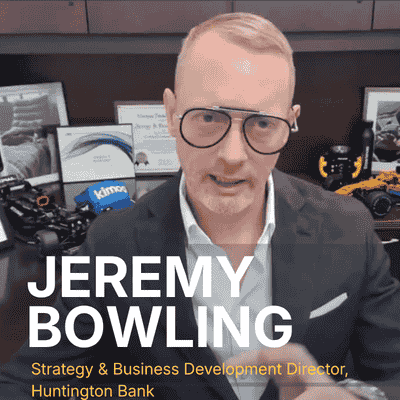
In this episode of CMB Connect, Val Buresch welcomes Jeremy Bowling, Strategy and Business Development Director for Mortgage Lending at Huntington National Bank. Jeremy shares the strategic "trident" that led to a 20% year-over-year increase in loan officer productivity and record-breaking production in December 2025. He also provides a deeply personal look into his journey to industry leadership, explaining how that perspective fuels his passion for helping first-time homebuyers navigate the complexities of the current market.
Jeremy's Strategic Reading & Listening List
To stay sharp and maintain perspective, Jeremy recommends the following resources mentioned in the episode:
Grit by Angela Duckworth Emotional Intelligence by Susan David Infinite Jest by David Foster Wallace Classic Satire: Slaughterhouse-Five, Animal Farm, and Candide
Podcasts: Wiser Than Me (Julia Louis-Dreyfus) and The Rest is History
[00:06] Introduction, the CMB Journey & Personal Resilience
[05:40] Scaling Production in a Flat Market
[08:30] The Trident of Success
[10:35] Defining Strategy
[13:14] The First-Time Homebuyer Advantage
[18:18] The Human Element in the Age of AI
[21:12] Bank Expansion Strategy to the South
[31:09] Staying Sharp: The Reading List
Transcript
Val Buresch (00:06)
Welcome back to CMBConnect, the podcast where we go beyond the designation to connect with the leaders that are shaping the mortgage banking industry today. I'm Val Buresch and today I am very excited to welcome Jeremy Bowling, CMB Jeremy is the strategy and business development manager for mortgage lending at Huntington National Bank. Jeremy, it's really exciting to have you on the show, welcome to the show.
Jeremy Bowling CMB (00:38)
Thank you. I'm really excited to be here, Val. I appreciate the invite.
Val Buresch (00:42)
I was thinking about our history together. I think you and I met for the first time at the OCC REACH for those people who don't know what REACH stands for. It's the roundtable for economic access and change. It was an initiative that the OCC ran for about four years, I think. And so we were meeting on a regular basis, leaders from banking, business technology discussing how can we reduce barriers, and increase participation in the nation's economy of different groups. let's start with maybe just a quick introduction. Just introduce yourself and also your CMB journey
Jeremy Bowling CMB (01:19)
well, sure. I'm Jeremy Bowling Like you said, I'm Strategy and Business Development Director here at Huntington Bank for the Mortgage Team. And I've been here just over five years, which is nothing at Huntington, of course, because the tenure here is pretty crazy. But I've been in this role. It's my first bank. come from the IMB space.
⁓ It's been a journey and you mentioned project reach, co-vergence has been another thing. Part of my journey to come join the banking industry was to, for better or for worse, learn more about those aspects of community lending, which IMBs do. It's just a different approach and accountability. So, CMB, it's been a journey. Like a lot of people, always say, wish I'd have done it sooner.
Val Buresch (02:06)
Yes, exactly.
Jeremy Bowling CMB (02:07)
You know, I there's sort of two times on the fork for that answer for me one is professionally When I left rocket and went to work for Union Home Mortgage, Bill Cosgrove was chairman of the MBA and I learned quickly the importance of industry involvement and advocacy and I looked up to Bill Like a lot of people do he's done more for me than anyone for sure But he was the first like wow, that's a CMB. I
I want to be that. I want to be that involved and respected, but also in the know. And it meant something. at that company, I took for granted how many CMBs and the level of involvement that took place there. Kevin Pizzani, Alice Albee, Jim Wickham, Don Griffith, Kelly Grys. I should stop because I'll forget some, all the CMBs of that one company. But they really inspired me.
That was professionally. Personally, it's meant a lot because A, I always want to be the best. I want to win. I want to be Googled for winning. And being a CMB, I think represents the best of the best in our industry. But more importantly, you what it says about giving back the mandate of advocacy, having that impact. That matters to me most because of my personal journey. I know homelessness like few do, unfortunately. part of wrapping it up in a certain timeframe was that this year marks 20 years of recovery for me. I was a homeless meth addict for many years. And that was my first exposure, enough, to market dynamics and foreclosure. I didn't know it at the time, but I wasn't like sleeping on your friend's sofa. would break into foreclosed homes and abandoned factories for places to stay.
And little did I know that housing would sort of eventually become a passion as part of my path forward and that stuff being in the Ruby Mirror. it meant, to say it meant a lot to me and a culmination of a couple of decades of hard work is an understatement for sure.
Val Buresch (03:55)
Thank you for sharing this story. I actually did not know the personal part of your story and I really appreciate you sharing it today. I think sometimes when people go through adversity of any kind, but especially like you did, it really is, it allows you to look at a space like housing finance in a completely different way. And I can.
I can see it, your passion for it and I'm really happy you joined the CMB Society. I think this network can allow us to achieve a lot, individually and collectively of course. But again, thank you for sharing this story.
Jeremy Bowling CMB (04:44)
And I would be remiss, I mentioned a bunch, but Susan Schaefer, actually my sponsor, was the one who tipped me over her story and becoming a CMB. I'm really grateful to her and everyone, you know, Teresa Ferman and the whole group does such a great job. Being a part of the society has exceeded expectations quite a bit, I can tell you, not only from the impact I see us making collectively, but the relationships you make and the unified front. on the advocacy stuff, so it's been awesome.
Val Buresch (05:14)
I like also your orientation to be the best. And I want to bring our conversation back to a little LinkedIn exchange we had a few weeks ago. You mentioned on LinkedIn that December 2025 was the best production month for your team. And for me, that was really interesting because it's not easy in this market. It has been a flat market in general January speaking.
Jeremy Bowling CMB (05:31)
Yeah.
Yeah.
Yeah.
Val Buresch (05:40)
So I want you to walk us through how did you achieve that success? Was it strategy that led to that success? Was it the market conditions that you exploited? Team? Some combination?
Jeremy Bowling CMB (05:53)
Yeah.
Well, you we're, primarily a Midwest lender. So a lot of times the seasonality hits us even harder, right? Now we have expanded and of course today we've expanded all through the South and Florida, but still, that's a dynamic not, not lost upon us. But, I really think when you talk about strategy, a lot of things that coalesced in the second half of the year that were just key areas of focus over the past several years, under Carolyn Gorman's leadership.
Val Buresch (06:01)
Jeremy Bowling CMB (06:21)
since she's taken over. I would shout out, so when we talk about geography, our North Carolina team specifically has just crushed it in their first full year. And so they've overachieved and that's been a part of the rising tide that's lifted all boats. And they're doing it organically down there, not through acquisition like other parts. But those key strategic decisions are probably the biggest part. We have made a conscious choice about where we're going to win and how we're going to win in our core footprint with our core customers based on data we have about demographics and consumer behavior in our markets. That's what we're going to focus on, whether it's the product type or the marketing tactics. And some of the tactics behind that focus, a ton of focus on brand marketing.
And we've had a whole brand refresh that I think is really kicking in and getting traction at the enterprise level. But we've had some really successful promotions with great resilience, very successful recapture initiatives, which is always a great topic in mortgage industry. But I'd be remiss also, if not foolish, to not mention our operations team did not miss a beat through the summer when a lot of times, you know, you're lean and you can, you know, contract date is being met.
Val Buresch (07:32)
Mm-hmm.
Jeremy Bowling CMB (07:37)
can slip a little bit, turn times can slip, CSAT, none of that slipped for us. So I think our operations partners also contributed to the momentum that led us through the end of summer, through the fall, taking solid applications that led to our best funding month of the year in December.
Val Buresch (07:55)
That's incredible story. And I will talk more about the strategy piece of how you're approaching mortgage lending. But also, You were also mentioning a specific number that you were achieving productivity gains. I think it was 20 % productivity gains. And it seems like this is part of the story, what you were sharing with us, the operations team being on the job. They're doing their job.
Jeremy Bowling CMB (08:12)
yeah.
Yeah.
Val Buresch (08:23)
Is that all or is there anything else to the success story of ⁓ improving your productivity gains for a loan officer?
Jeremy Bowling CMB (08:30)
Yeah, I'm glad
you brought that up because when I talk about loan officer productivity being up 20 % year over year, we typically lead our peer group in Stratmore already for loan officer productivity. And then in addition to that, we aren't talking about like LOs in their second year. We have a very young and vibrant group of loan officers to help. But when you see loan officers that have been here 10, 20, one lady in 30 years,
and have their best month ever, there's got to be something to that, right? It wasn't rates and it wasn't inventory. So our culture of coaching, which I know sounds cliche, but it really isn't. Our culture of coaching and how we've dulled down on that, whether it's leadership or sales development programs, Allison Hansgun and team, and Nima have done a great job driving those programs. But that's how we win. You win as a result of powerful coaching, that's my signetting reference.
Val Buresch (09:03)
Yeah.
Jeremy Bowling CMB (09:26)
But when you see loan officers of all experiences having that level of year over year improved success is pretty cool. And then like I mentioned about tools in the first answer, selfishly, you know, putting into place mortgage coach, sales boomerang, credit expert, home bot, or Lee, I'm going to miss some, but the last 24 months of sales enablement tools we've given our team are also truly starting to pay off. So between coaching,
the tools in our operations team, I'd say that's the trident of success that led to our productivity gains.
Val Buresch (10:03)
That's fantastic. And I think it ties up with ⁓ some of the portion of the conversation that I wanted to spend on strategy in general. I think a lot about strategy and I have my one of the writers or the thinkers, so to speak, Roger Martin is one of the people I follow and read his books and hear his interviews.
He says that a plan is not a strategy and because, you know, plan is a list, know, you have you're checking your plan, but to win what you're also ties to what you're saying. It takes more than a plan. It takes more than a checklist. It's positioning you in a place where you can differentiate yourself from your competitors. You can.
capture the target market that you want to go after. So I'm just curious about that. How do you think about strategy at Huntington Bank? Banks are notorious for having plans, budgets, moving slowly. How do you do this? How do you manage that kind of a structure, very bureaucratic?
Jeremy Bowling CMB (11:05)
Yes. Yes.
Val Buresch (11:12)
I just can't come up with another word right now, but you know what I mean.
Jeremy Bowling CMB (11:13)
Yeah, bureaucracy is not lost upon me. And it's been a, my answer sitting here today has evolved a lot over the past few years, not even just from before I came to Huntington, but within Huntington. And a lot of that I would say is Brent Standridge, our president has really brought a lot of clarity to what strategy and planning and tactics making those delineations. So there's no ambiguity.
If you're paying attention here at Huntington, there's no ambiguity about what our strategic plan is. To me, as you mentioned, Roger Martin, to me, it's clear choices about where we compete and how we will win. Those are the choices that lead to the plan that you execute on. But I think for us in banking, it has become for me about those very clear choices, also acknowledging where we don't want to play.
There's no shortages of places to make money and be successful in the industry. You can't be everything to everyone. We're very distinctly clear that we are not trying to be everything to everyone. We want to welcome all culturally, but we've got a competitive advantage around ⁓ helping our communities navigate complexity with the mortgage industry.
And that's why when we look at data and the consumer behaviors and the demographics of who our customers are, our core customers, that's why the first time home buyer space is somewhere that we're so successful because the guidance we provide with, whether it's DPAs or programs, going beyond mortgage to long-term financial planning, this resonates in the markets and communities we're in. And it's all relationship based.
And that has a lot to do with the overarching strategy of the bank and the consumer bank especially. So aligning with that on those clear choices is what leads to the forth going plan then that you execute on to be successful.
Val Buresch (13:14)
Because you mentioned first time home buyers, let's continue with that topic for a moment. You also mentioned in one of the LinkedIn posts that you put that you're closing a first time home buyer loan every 30 minutes. And I think that's massive. And ⁓ I want to understand whether this is a marketing message or is it real?
Is it real for you guys?
Jeremy Bowling CMB (13:39)
It is real. And I've had to unpack why over the past few years to try and like double down. That's, you know, what's the reason behind this so that we can, you know, amplify our presence in there. It does start with trust. And so I would say that we are very lucky to be at a brand that has built trust for 160 years in our community. So, you know, the vast majority of our business is self-sourced.
So when the realtors and our centers of influence trust our brand and they trust our loan officers, them passing through and trusting, whether it's their customers or their families that are first time home buyers, them trusting us with those referrals is really important. It's also worth noting that the referrals we do get from branches, almost 50 % of those are first time home buyers. So the market dynamics certainly help and the brand trust I think is a huge thing.
Val Buresch (14:29)
Mm-hmm.
Jeremy Bowling CMB (14:34)
Once we sort of learn and understand those things, then the last couple years we've put significant focus and resources into providing advice and guidance to augment that trust. We've been known for trust, but we've had opportunities to get better with advice and guidance. So that's where you do bring on a mortgage coach, credit expert. You do a little better job on coaching clinics, on what advice and guidance look like to customers. You study it.
we redo our surveys so that we ask about advice and guidance. And not only did they receive it, did what they received meet their needs. And so those investments are built upon the foundational trust and brand message I mentioned. But that's been what's given our team, I think, a level of confidence that this is really a space that we're setting a standard in with first time home buyer acquisition.
Val Buresch (15:05)
Mm-hmm.
make sense. And before I ask you my next question on first time homebuyers, can you level set me on how you define first time homebuyer? Because there are different definitions depending where you are in our society.
Jeremy Bowling CMB (15:40)
Yeah, how we define it when it comes to our production, we're usually using application data. So that's pretty much our fundamental source. We also reconcile that with the NAR data and other sources. We look at percentages and penetration rates of our own 4 million plus customers and how that compares to the metro area specifically that they're in.
But we try and stay aligned with generally how the broader industry measures for First Time Home Buyers
Val Buresch (16:15)
Yeah,
right. It is kind of confusing when you think about it in housing finance, we measure it as borrowers who did not own a home in the last three years, roughly speaking. But when you think about it, it could be that that borrower did not own a home in the last three years, but it had that she or he had owned the home 10 years ago.
Jeremy Bowling CMB (16:27)
Right. Right.
Val Buresch (16:41)
Is that a first time homebuyer? know, some people, there are different definitions. We at Polygon Research also follow the standard housing finance definition for three years, tenure, home ownership, kind of cutoff date. But it's interesting that there are some, it could be confusing when you talk about first time homebuyers.
Jeremy Bowling CMB (17:00)
Well, I will say internally, one thing we do that we also reconcile some things before I go out on LinkedIn and brag about them. When it comes to certain products and promos that are very prevalent in our first time home buyer penetration, those are blatant. I have not owned a home before. I understand the 10 out of three and what you're saying from industry level. We don't disagree with those things, but we do reconcile a lot of data with products and programs that require you to be a first time home buyer.
net new that you know get into the counseling and those things and I don't think that's uncommon in the industry. I think we have a lot of rigor around it but because those things can be a little more nuanced they aren't as broadly published from one lender to the next because they can be very product and program
Val Buresch (17:48)
we take the agency data. There is a very clear signal there when we analyze markets and things like that. ⁓
Jeremy Bowling CMB (17:55)
You guys are
as good as they get. I will say that vowel when it comes to that type of analysis.
Val Buresch (18:01)
thank you for that. So speaking of this segment, the first time homebuyer, what do you think is different about serving them today versus two years ago when the interest rates start, or three years ago when the interest rates start going up?
Jeremy Bowling CMB (18:18)
I think that the level of education and handholding that loan officers need to be able to do with their realtor referral partners and their first time home buyers has gotten even more significant despite the technology and despite a lot of great technology that's specifically focused on home buyer education, by the way. There's some great platforms out there now, but I still think that there's a level of that human connection that
Val Buresch (18:31)
Mm.
Jeremy Bowling CMB (18:45)
With AI, all these other things, I think there's a of a re-invigoration, a renaissance, if you will, of how important that advice and guidance that you get from a human is and that comfort, that empathy. So that when you're breaking down, you know, what your payment's gonna be based on today's rates and trying to put things in perspective for people, it helps them get to a point where it's not just about payment, it's not just about rate.
Val Buresch (18:47)
Mm-hmm.
Jeremy Bowling CMB (19:15)
We talk about their goals and we talk about, you know, what is the point of owning a home for you in the first place and what's the value behind that? How does that even translate to your future plan? So I'm really proud of our net promoter scores and our customer satisfaction scores when it comes to questions around those things, because clearly I think that's what our sales team puts a lot of focus on. So that helps us win in that space.
I still do think that there's a lot to be seen. This answer might be a lot different 12 months from now, right? what AI was over the summer compared to even AI today is quite a bit different. And you know that they're all using it and they all expect the digital experience. But I still think no matter how digital and how high those expectations go for customers on their technology expectations, the human element.
Val Buresch (19:45)
Mm-hmm.
Mm-hmm.
Totally.
Jeremy Bowling CMB (20:06)
stands out even more.
Val Buresch (20:08)
And it will be even more important. It's just that high level nuance that human to human can supply versus the AI. The AI will be very good, I think, providing very objective information. It's just that last mile of communication will be still human.
Jeremy Bowling CMB (20:17)
Yeah.
Yeah, generally speaking, if you ask AI if it's a good time to buy, they're probably going to say yes and give you what makes sense in the answer. But does it?
Val Buresch (20:37)
Yeah. Yeah. Or
you know what also happens? You, it can agree with you, the AI, you ask a question, it agrees with you. And then when you push back, it changes its answer immediately. It's very interesting. That's right. So I want to talk about the elephant in the room.
Jeremy Bowling CMB (20:50)
You're kidding, yes. Yeah.
I've never lost an argument. With AI.
Val Buresch (21:01)
or maybe this is the opportunity. I also saw another announcement from the Huntington Bank that you guys have completed your acquisitions. So you made a massive where to play, speaking of strategy and playing field, you made a bet, a choice rather, where to play. You acquired Cadence Bank and Veritex Community Bank.
Jeremy Bowling CMB (21:12)
Yes. Yes.
Mm-hmm.
Val Buresch (21:28)
Last year, you completed those acquisitions. You're going into the South. You mentioned the performance of your North Carolina team. But now you are expanding officially in the South from Midwest to the South. And that's a big deal, I think. So I just want to pick your brain. What would have to be true about 2026 mortgage market for this bet?
Jeremy Bowling CMB (21:29)
Yeah.
Val Buresch (21:52)
to be a home run in 26, immediately after the acquisition.
Jeremy Bowling CMB (21:56)
Yeah, well, thanks for acknowledging that it's obviously a big deal and a huge investment. ⁓ And there is no plan B, nor should there be. at the risk of sounding overly confident, I have seen plan A. I don't think our strategy to be successful in the South is reliant on any specific dynamics or shifting winds in the market itself. But that goes for the entire footprint.
Val Buresch (22:02)
Mm-hmm.
Jeremy Bowling CMB (22:18)
We put a lot of rigor around understanding all eight sides of the equation and the environment so that it means we do have a plan that involves potential contingencies and what I call pivot preparedness, if you will. But setting rates aside, because that's always the one thing that there's plenty of forecasts that they can all claim who's right. There's still a pretty narrow spectrum outside of black swan or major events that people will pretend to have predicted anyway.
The new normal of inventory and product capabilities, as well as the blatant need in the market, the need for housing and the hunger that people have to upgrade their housing as well, makes the environment ripe to succeed. And noting, you know, as you know, the significant macro growth expectations of these markets we're talking about, whether it's, you know, Texas specifically or just the South, Georgia is a powerhouse.
Val Buresch (23:05)
Mm-hmm.
Jeremy Bowling CMB (23:10)
when it comes to the purchase market the last several years. So that is not lost upon us. So we're prepared for contingencies, but the plan itself is based on a menagerie of forecasts. And we measure those to make sure our plan is relevant. But should there be tail ends? Well, we'll lean into more volume, but more volume itself won't necessarily equal success. I'd actually argue...
that should there be headwinds, I think we're prepared to succeed even more because of our conservative, know, low to moderate risk appetite. So our plan A is aggressive, but it's still a conservative and prudent. But if there's any headwinds, I believe especially compared to peers, we're actually set up to succeed even more just because of our strategic foundation and the brand team and the marketing teams have been doing and will continue to do a fantastic
of making sure that our story is also being told loud and clear in new markets.
Val Buresch (24:10)
And you know, the South is one of the biggest, most vibrant markets. It has been in the last few years and it's just, it makes sense. That's where a lot of young people move their jobs. It's a big engine. And I love the optimism that I hear in your voice about there is no, there shouldn't be a plan B. You you go with your plan and, and, and, and, know, it forecasts, I, someone who
Jeremy Bowling CMB (24:15)
Yeah.
Yeah.
Val Buresch (24:36)
works with data, they are usually wrong anyhow. So it's to the extent that you know your local markets, that you can manage the messaging, spot the opportunities it comes and act on it. I think that's where that agility of a lender comes to play when expanding in that kind of way.
Jeremy Bowling CMB (24:44)
Right.
Yes, yeah, that's very true. There's still directionally, you you can't ignore them. But at the same time, especially when they're on the national level, you have your the footprint that you're taking into consideration is a huge factor. So you have to you have to get a little more granular and get inside of your footprint for these growth areas and understand those dynamics. So hopefully no one blames us. You know, we're we're in the north. Hopefully none of our new.
Southern contingency takes the weather out on us. We're not sending it down there, I can assure you. But the South certainly has an appeal year-round that's largely weather dependent and a lot less seasonality. So to take those things into account compared to our legacy footprint forecast and how we think about our current markets and not just doing it the same way for these new ones is really important. Thankfully, there's
people way smarter than me generally spending time.
Val Buresch (25:52)
So I have to ask this because I've seen a very wonderful image that you regularly post on LinkedIn. This is Gatsby. So I've seen Gatsby on your LinkedIn profile so many times. And I want to ask if it is because he's a good luck charm for you for hitting production goals or truly he's your best friend like dogs are.
Jeremy Bowling CMB (26:14)
Yeah, I mean, he is my best friend. I, other than him, I, I lived alone for quite some time. but, ⁓ you know, there's a fluffy face and there's a happy-go-lucky demeanor. He is a fierce advocate for change and fair play. But a lot of times Val, it's, it's about the tone and the perception and perspective, right? He's a dog. He's fluffy and he is my best friend. But a lot of times it's, it's trying to put.
Val Buresch (26:23)
Yes.
Jeremy Bowling CMB (26:42)
A little levity, or a little smile, or a little picture to add some perspective to sometimes situations that are sticky and volatile and sometimes hostile. I'd like to think that we do a good job in the industry of leaving that to others, the people I tend to interact with online. We don't deal with that. But using those stories and those images for me is a reflection of sort of my personality in many ways.
But it's also meant to sometimes be a bit of a disarming technique, bring the temperature down on what people think. you know, does Gatsby literally have an opinion about the credit bureaus and pricing and what we're wearing? Probably not. You know, he's probably worried more about his next treat. But at the end of the day, it goes back to just that perspective and understanding what we do is very important for the economy, for people's retirement, for the homeowners themselves.
Val Buresch (27:25)
you
Jeremy Bowling CMB (27:40)
But at the end of the day, how we treat each other and how we take care of each other, which is a strategy in and of itself, that's still at the core of most of my messaging. And I'd like to think how I carry myself as well.
Val Buresch (27:54)
That's beautiful. And I absolutely love seeing Gatsby's pictures. He's perfect. So, yeah, let's get back more to the serious stuff and speaking again of strategy and of your title, You're strategy and business development manager. And I wonder if this is a lot. What do you think those two functions?
Jeremy Bowling CMB (28:01)
Well, I appreciate that. Thank you.
Val Buresch (28:19)
are complementary to each other or are they sometimes in a kind of conflict with each other?
Jeremy Bowling CMB (28:28)
Yeah, you know, it's we've we've sort of figured it out over the first couple years when I was here about how that would look. It's a pleasure to be able to do both because a lot of times there is a separation there because one is a lot more execution related and they're, you know, they're they're both big jobs in and of themselves. I'm blessed with an incredible leadership team that
Val Buresch (28:34)
Mm-hmm.
Mm-hmm.
Yeah.
Jeremy Bowling CMB (28:52)
makes it a lot easier for me than it should be. But they're different muscles. In mortgage leadership, you need both. I'd like to think that one makes the other better. But as we sort of alluded to earlier, strategy is the architecture, it's the blueprint that you build the actual plans and execution off of. It's making those hard choices about your positioning and priorities in the market. To me, business development is the fieldwork, right?
It's building relationships and partnerships that turn strategic choices into actual business. So I am lucky in my role to have a hand in both. It also feeds my type A engine quite a bit, but it provides me the latitude to have both the line of sight strategically, short, mid and long-term. And then the unique way to interject myself on the business development side.
Val Buresch (29:20)
Yeah.
Jeremy Bowling CMB (29:45)
So it's fun to have the opportunity to have both hands on the steering wheel.
Val Buresch (29:52)
Yes, and I think the CMB designation also is helping you with that. It provides definitely input into the strategic one and the business development side is networking within the society.
Jeremy Bowling CMB (30:00)
⁓ yes.
Abs, yes, again, one of the things that you can't be understated, you sometimes people hear the word networking and they think of it as entirely social and that's fine. But in our business, if you're in strategy or business development, there's, you know, there's a lot more to that networking. Yes, you don't want to be a sociopath and only use people for transactional purposes. You know, it's great to get to know people. Some of my best friends have come from the CME society.
But at the end of the day, these are bright minds and networking with them can not only turn you on to things that might be early ideas you want to be on the tip of the spear for, data, such as yourself and being able to skate to where the puck is at and where newly mined data and how it's being used more importantly are out there. So that networking and that aspect of business development, it can be exhausting, right?
But in order to really be plugged in and know what's going on out there, which is required to be good at your job, the CMB has been a huge lift and I believe helping me make my job better.
Val Buresch (31:09)
really wonderful to hear that. You also, you mentioned training and development, and you're working with the loan officers on that, but how do you stay sharp yourself? Like, for example, do you have any business books, strategy books that you're reading? Who are you learning from? And also, ⁓ what conferences? And apart from the CMB Society, do you have other communities that matter?
Jeremy Bowling CMB (31:13)
Mm.
Val Buresch (31:33)
to you.
Jeremy Bowling CMB (31:34)
⁓ yeah. mean, big into the Ohio MBA, my participation there, but also some local work with ⁓ struggling youth or adults with substance abuse and things. Habitat for Humanity has become a passion of mine that I'm so blessed to have been asked to join the board. Cleveland has a great organization, but
Val Buresch (31:42)
Mm-hmm.
Jeremy Bowling CMB (31:59)
It's become a very quick passion of mine and beyond just an advisor. I do stay sharp through dedication to routines and discipline, which I need. But they are generally centered around reading, learning and fitness. Mornings, I focus on more brain related games, but also business reading that either teaches me something or inspires me.
Val Buresch (32:10)
Mm-hmm.
Jeremy Bowling CMB (32:24)
Recently reread Grit by Angela Duckworth amazing book the science of grit but also You know understanding a little bit more about yourself with some of the interactive parts of the book I'm now reading emotional intelligence by Susan David, which is Interesting out of the gate. It makes some correlations to Frankle's man Search for Meaning which is very dense so I'm
Val Buresch (32:46)
yes, yes.
Jeremy Bowling CMB (32:49)
I'm early in that, I'll have to come back to you, but it intrigues me about emotional adaptivity and embracing change is a big part of it. But evenings and a lot of other times, I was an English major back when liberal arts were a thing in the 90s, but I like to geek out on fiction usually, very socially satirical stuff in literature. So I've been rereading short.
stories of David Foster Wallace, who is shameless me, my favorite author, Infinite Jest is his most notable work. I think there's so much truth in humor and in fiction. Again, it helps me with perspective, which I probably said the word perspective a lot, but it's an important word to me. It helps me with that perspective, but we can learn so much from history. Slaughterhouse Five, Animal Farm, Candide, these are all classic works that are as relevant today.
Val Buresch (33:17)
Yes.
Jeremy Bowling CMB (33:36)
as they were when they were written. And I often find you can learn some lessons there and help them sink in even more than just blatant advice that comes from the business books. I also listened to some podcasts. I love Julie Louise Dreyfus's podcast, Wiser Than Me. She largely interviews just very powerful and prominent women that have all kinds of great wisdom to convey. And she actually ⁓ is re-
Re-airing I think her interview with Katherine O'Hara this week. I'll be sure to take that in She's a favorite icon, but I just look up to her a lot huge Seinfeld and Beat fan But that and then the rest is history podcast, which is a history podcast with some humor to it similar to my my literature leanings, I just find that there's a lot you can learn from history and That's why from time to time in posts when I make a comment
Val Buresch (34:16)
Mm-hmm.
Jeremy Bowling CMB (34:26)
When I make a comment about, know better this time though, right? That's usually just a very loaded way of referring to, you know, my passion for looking backwards in order to understand what's ahead of us. Because it's, like I said, so much of what we've already gone through is as true today as it was then.
Val Buresch (34:46)
This is perfect. you know, the books that you listed, I would like to list them in the show notes. So if I have forgotten anything, I'll come back to you and make sure that I have listed every book because they sound amazing and I've read many of those. But I think it's important to go back and even reread some of those books. I agree with you that you can learn a lot from history.
Jeremy Bowling CMB (34:53)
Yeah.
Yeah.
Val Buresch (35:12)
And I think fiction teaches us to be more compassionate, more empathetic to other people and to put, as you said, things into perspective.
Jeremy Bowling CMB (35:22)
Yeah, that's interesting you mentioned rereading because when I said I reread great range of the Duckworth, it meant so much more to me reading it last year just because of some life things and where I was compared to the first time I read it. It might as well have been the first time I was reading it. So I think that's really important sometimes is not just to get through something to get through it and then move on. Let something sink. But also there are times you want to earmark a book itself and come back to it.
at appropriate times and you'll read it quite different.
Val Buresch (35:55)
Thank you for that. And before we go, Jeremy, is there anything you want to leave our listeners with?
Jeremy Bowling CMB (36:03)
Well, I would first of all just say the whole CMB plug, which is not a plug. I'm on a mission to drive more here at the bank, but Bob Neme and everyone has always been right when it's like, didn't I do this sooner? And so glad I did and so grateful for the community. But I think we've covered a ton.
well, I think what's mostly top of mind is I would give a little plug for the bank. The blood, sweat and tears kudos to thousands of colleagues that have put blood, sweat and tears into making this expansion, these multiple expansions happen. And we're committed to being the destination of choice for sales and operations staff.
in the mortgage banking industry at Huntington Bank. So I'll throw that out there. Happy to take it on as a challenge if anyone feels differently, but very proud, grateful to be asked to go out and share a little bit of my story and Huntington's story on your platform.
Val Buresch (37:03)
Thank you. And this is perfect ending. Thanks again for being on the CMBConnect, Jeremy. And to everyone who's listening today, if you enjoyed this episode, subscribe wherever you get your podcasts on Apple, Spotify, YouTube, and leave us a review. It really helps. And share this with someone in the industry who needs to hear this kind of conversation. We are all in this together, this life together and conversations like this make us better.
I'm Val Buresch and this is CMBConnect. We'll see you next time.
