S2 E6
Building Habits for Success
Show Notes
In this conversation, Val Buresch and John J. Lynah delve into the challenges and opportunities within the housing finance industry. John shares his unique experiences of navigating international markets, the importance of professional designations like CPA and CMB, and the significance of building effective habits for success. The book they mentioned in their conversation is by James Clear. They also discuss current market challenges, strategic planning for growth, and the collaborative nature of the mortgage industry.
About John J. Lynah
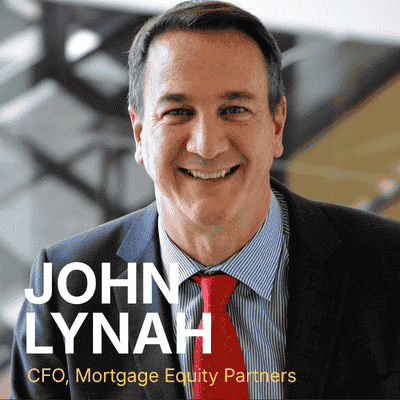
John is the Chief Financial Officer for Mortgage Equity Partners, (“MEP”) located in Lynnfield, MA. John has over 30 years of experience in the financial services industry. John started his career working at Harvard University as the Accounting Manager for the Credit Union. After ten years at Harvard, he accepted a role in Corporate Finance at State Street Bank while attending the Professional Evening MBA (“PEMBA”) Program at Boston University where he earned his master’s degree in business administration (“MBA”). He also holds the professional designations of Certified Mortgage Banker (CMB), Certified Public Accountant (CPA), and Certified Forensic Examiner (CFE).
John has dual citizenship (USA & Ireland) and in 2004 moved to London for five years where worked as a Financial Controller for JP Morgan and Barclays Banks. He later transferred with Barclays Bank to New York where he was the Head of Financial Control for the Wealth Management Division.
After New York, John moved “home” to Boston where he joined Mortgage Equity Partners (“MEP”) as the Chief Financial Officer. John is a member of the Executive Management Team at MEP where his primary objectives are to oversee the Finance and HR Functions of the organization.
Transcript
Val Buresch (01:44)
Welcome to the show.
John J. Lynah (01:46)
Thank you very much and it's nice to speak to you.
Val Buresch (01:48)
Likewise, and truly John, this is so great to have you on. And in our preliminary conversation, we found out that you and I share a wonderful and very unique connection. I was born and raised in Bulgaria and you while working in London bought a home on the Black Sea. Tell us about that.
John J. Lynah (02:06)
I did, yeah, my partner and I,
yeah, sure. I was in London for five years, as you mentioned, and my partner and I, were a little bit bored one day and started to think about what we wanted to do. And at the time, this was before the global crash, everybody was buying property in Bulgaria on the Black Sea. And we had both sold our homes before we moved to London. So we had some money to kind of play around with. So.
We did everything for two guys in finance. We did everything that you're not supposed to do. We basically flew over there. We bought a property that hadn't been built yet. We didn't really know much about it. ⁓ And it was just the I know that we had talked a little bit before the call. And what was so interesting about the closing process, buying a home in Bulgaria. Well, first of all, not only do you not understand the language, but you don't even understand the alphabet. It was in Cyrillic.
And so, you you're taking a lot of chances, but everything worked out for us great. And we owned the property for the five years that we were there. We'd go over at least four or five times a year. It was right on the Black Sea, which was absolutely beautiful. And then when we left, we kept it for another five years and then rented it out. And eventually, once we got back to New York and Boston, it just didn't make any sense for us anymore. When we were in London, we could get there in three hours, three, four hours. And when we moved back to the States, it just made no sense.
Yes, so we do have that incredible connection that I know your native country very well. So it was really great time for us.
Val Buresch (03:30)
You
Yeah,
this is so fun. you're right. It's the Black Sea is really beautiful. But I find that you've been to Bulgaria more often than I have when you lived in London. ⁓ speaking, since we are in this world of real estate, housing, finance, ⁓ what was the biggest culture shock or challenge you faced when you navigated the purchase? You start mentioning that you bought something that didn't exist actually.
John J. Lynah (03:42)
That was the idea.
Yeah, so that was the other thing. When we actually bought it, we ⁓ looked at plans and there were images of what was going to be built. So ⁓ we had certainly done some research and found an area that we wanted to buy in and went around there. But it was really quite daunting and risky because you're used to, obviously, the comfort of buying in your native country like the US and buy property and have rental properties in Boston.
But you you're buying in a country that you don't really know and it's just that the biggest thing is the ⁓ You know, you have to get an attorney a local attorney and then you have to get a translator and it was all in as I said in Cyrillic What was even more interesting is when we sold it. It's a very different process than in the United States So in in Bulgaria what you do is you say what you want to get how much so I'm just using an example But say you want to get 300,000 euro for the property
That's all you know is that you're going to get that now. The realtor could go around and sell it for 400,000 euro and you have no idea. So it's not like it's a little bit different. So, but those are just some of the, you know, some of the chances then the risk that you take. And thankfully for us, it worked out, but then it's made for some great stories over the years. So very glad, very glad we did it. Thankfully. As I said, we own it for 10 years, but it was a very different process. And as I said, you have to get.
lawyers and translators and just the process itself was much different than not as robust as here in the US. And certainly this is, as I mentioned, this was pre-crash. So even in the United States, a lot less documentation and everything was and actually the counterparty that purchased our home in both Gary literally showed up with cash. yeah.
Val Buresch (05:43)
Yeah. Yeah. I find that this is an incredible story and even I don't know
how to navigate those transactions as you said. They are not so standardized. The markets are opaque, not like here. We even don't really appreciate how much transparency we have in the purchase and the sale of real estate. Yeah.
John J. Lynah (05:53)
Yeah.
Correct.
And in retrospect, it was a risky venture on our part, but when we did it, said ⁓ we didn't spend anything we weren't willing to lose. But it was very daunting at the time.
Val Buresch (06:21)
You know, John, you are actually the second guest who we had on the CMBConnect podcast who had actually spent a significant part of their career in London, in the UK. It was Mike Hyman. He was in the early part of the 2000s. He ⁓ was there. But these two stories, and we'll get into your experience in a little bit, but they speak to me.
to the potential for international reach of our industry and specifically our designation and the value of sharing those best practices, especially in housing finance across borders.
I wanted to talk about your time at Barclays in both London and New York and to tell us what did you work on and how did this international experience shape your view of housing finance in the US?
John J. Lynah (07:12)
Sure. Well, you one thing that's just interesting, because you mentioned the designation. So I went over there in 2004. I just finished my MBA. I'm very fortunate. I have dual citizenship. So I have my Irish passport as well. So I had no issues worth working abroad. So I can work anywhere in the EU. But one of the really interesting things is I went over with my partner. He was on an expat assignment with State Street Bank. And I just finished my MBA. And again, being
a little bit naive. Day one, you he starts work for his new company. And here I am faced with trying to find a new job in a new country that I have no idea. I have no connections or anything. And one of the most interesting things, because I had done accounting all my life, so accounting and finance. And one of the most interesting things is that I the MBA is not an MBA, you know, Masters in Business Administration is not as widely recognized abroad in Europe. And
Val Buresch (07:52)
Mm-hmm.
John J. Lynah (08:06)
So I thought I would have no issues getting a job. And what I quickly learned, especially working in accounting, is that I actually really had a very, very difficult time getting a job despite having already worked for 15 years, ⁓ especially in accounting. The accounting industry in the UK is very, my ⁓ recruiter said it was a very arrogant industry and they have several qualifications. And so. ⁓
My MBA did nothing for me and I actually at 40 years old when I was there, I had to go back and take the CPA exam. So I had to get certified. And so it forced me to basically take the CPA exam, which was fantastic. I'm very happy that I did it. ⁓ But I had to do that. And after being out of undergrad for at least 12 or 13 years, it was very tough. But the minute I passed my CPA exam, had a job and I got my first job at JPMorgan Chase within two weeks.
Val Buresch (08:57)
Mm-hmm.
John J. Lynah (08:59)
focused on the credential and licensing. So that was part of my experience. for me, the most impactful thing about working abroad is just you start to see other people's view of the world. not everybody looks at it. And by the way, I was working for a US company. I was working for JP Morgan. And it was just very interesting to see other people's perspectives. So I worked with a lot of people that were.
part of the Commonwealth. So I worked with a lot of people from Canada, from South Africa, anybody in ⁓ New Zealand, India, so anybody who is part of the Commonwealth. So it's a very, very diverse workforce and very intelligent workforce, but diverse, but also just very interesting way different people approach ⁓ work and how they conduct business. So that was probably the most eye opening for me.
Val Buresch (09:31)
Mm-hmm.
That's a fascinating story that you had to take a CPA while in UK in order to find a job in the UK.
John J. Lynah (09:54)
Yeah, and as a matter of
fact, the interesting thing about that is you physically have to take the exam in the United States. So what I would do is I would get to study materials, stay in London for a few months, fly back, take the exam. And I had to do that four times, so for the four sections. So I had to fly back four times.
Val Buresch (09:59)
wow.
Now that you have the CMB designation, where do you see those connection points between the CPA designation and the CMB designation? you find any similarities, anything that you draw from one in order to be the other, so to speak?
John J. Lynah (10:27)
Well, I mean, the CPA exam is very much finance focused. So in that respect, much more kind of finance focused where with the CMB, you're learning all about the mortgage industry. So and that was really the reason that I took it because I've been in financial services for almost 30 years now, always in financial, you know, more finance roles and what the real.
Val Buresch (10:40)
Yeah.
John J. Lynah (10:50)
drive for me to take the CMB was to kind of learn the overall mortgage business. I didn't know much about, you know, operations, hedging. I did get my MLO license, so I'm also a licensed mortgage loaner at J. So that part was a little bit easier for me. But just to learn about, you know, everything about, you know, as I said, underwriting and operations and hedging. And so it really tied the whole industry together. And I think we talked about it on the call.
Val Buresch (10:56)
Right.
Mm-hmm.
John J. Lynah (11:17)
on our initial call, which was very interesting for me is when I was studying for the CPA exam, was just dreading it every day. was something that I had to do and it was very, very cumbersome. as I shared with you, when I was studying for the CMB exam, I never once felt like I was studying. Every time I was kind of reviewing the material, was just so insightful to me because it was just like, OK, well, now I understand why we're doing that because there's a lot of things that my colleagues here and counterparts did and I never really fully understood it.
Val Buresch (11:26)
Yes.
John J. Lynah (11:45)
And then it just started to make so much sense to me. And so it was a really great experience. I'm so happy that I did it.
Val Buresch (11:51)
Yeah. Well, it just strikes me that you're a very disciplined person and you did it, you know, whether you were dreading it or you were enjoying it, there is a certain level of discipline that you have to have in order to get any, to finish something. People start many things, but finishing something, especially achieving a designation, a level of education that is discipline. And I...
John J. Lynah (12:14)
especially at
my age too, because I shared with you, I just turned 62. I think I'm probably one of the oldest people that's ever done this, but it was fantastic. It was really great.
Val Buresch (12:24)
wonderful, wonderful. I think this conversation and where we are with taking the CPA and the CMB connects with something that I saw on your profile, a quote on your LinkedIn profile, a quote by the inventor of the Alexander method, Frederick Alexander, I think was his name.
People do not decide their futures. They decide their habits and their habits decide their futures. So I find that a very powerful quote and Alexander's work, the way I understand it, was about unlearning bad physical habits to improve his performance. And so that kind of discipline that
kind of a discipline, very conscious, almost like self coaching is interesting. And I found that interesting that you chose that quote from this man. ⁓ So how do you apply this philosophy as perhaps some metaphor for your day-to-day work? What are, for example, your key habits that you've built, something that you've unlearned, something that you had to learn?
to be successful, be where you are now.
John J. Lynah (13:37)
Thank you. Yeah. Well, and it's interesting. ⁓ You know, I love my job and I'm always working and I don't have really a lot of habits. And believe it or not, actually, when I read, I'm kind of one of these nerds that read, I read a lot of kind of self-help books. And I think I saw that quote, but I read, this is a really great book. You've probably heard about it. It's called Atomic Habits. And it's quite clear that it's phenomenal. It's just this great book. And you mentioned undooing Bad Habits. And one of the...
Val Buresch (13:57)
I love that book, yes, yes.
John J. Lynah (14:04)
things that I really took from that book, which I'll never forget is because it's not about just the habits, the, you know, making small daily changes, but then the compact, I'm sorry, the compound effect of small habits every day. And one of the analogies is he learned, you know, he basically was saying, you know, if you, you have somebody who smokes, you know, if they smoke, I don't know, they smoke a half a pack of cigarettes a day, well, you know.
Over six months, that may not be bad. Over three months, it may not be bad. Over three years, it's worse. And over 30 years, it's very bad for you. And conversely, you can say the same thing about good habits, you know? So a little bit of physical exercise every day over long periods of time is beneficial to you. And I mean, and that's kind of how I always kind of attack, kind of approach some of these challenges that I check on, whether it's the CPA exam or the CMB exam.
And with the CPA exam, remember the biggest section was financial reporting. And I remember when I started that kind of journey, I said, that is the biggest and most onerous kind of part of the exam. And I said, if I could pass that, then I will continue. And so I did. And so then I continued. But it's kind of just about those things. Things can be so daunting. So I kind of break things down into very small chunks to not make it so overwhelming. And my colleague.
Dave here, he also passed. And so we both went out to, ⁓ we were both in Las Vegas for the ceremony. And we were both saying how interesting it was, because when you start the journey, the goal is to get to walk across the stage in Las Vegas. And then we both said, wow, we're here. It seemed so daunting at the beginning. And you would never get there. But all of those kind of small incremental steps.
to prepare for the CMB exam, I personally took School of Mortgage Banking 1, 2, 3. My colleague Dave's been in the business for like 30 years, and so he didn't have to do that. But I really felt that to get the overall breadth of this industry, I took School of Mortgage Banking 1, 2, and 3, and then the prep course. But that's my point. You know, take School of Mortgage Banking 1, 2, and 3, then you take the prep course, and you have your study group, and so it's a process. But if you break it down into those chunks, it's not so overwhelming. Yeah.
Val Buresch (15:52)
Mm-hmm.
Yeah, yeah,
that's a fantastic mindset. And I love your description of how those habits, I mean, I guess the habit is breaking down in small chunks, something big that you need to accomplish. You mentioned the rewarding parts of the journey and the process of becoming CMB, of being with people, just that kind of a joyful experience of the learning process, even though
John J. Lynah (16:19)
Yeah, all time.
Val Buresch (16:33)
I mean, taking the three School of Mortgage Banking is not a small feat. It's one week per School of Mortgage Banking. So that was a great dedication. But was there any challenging part of that process for you while you were taking the CMB, going through the CMB journey at any point?
John J. Lynah (16:53)
Well, I think, everybody, on my part, the hedging section is very intimidating. I had already passed the I was a licensed mortgage loan originator, so I didn't feel as daunting by that. And because I was on the finance side, the finance side was OK. But for me, was really the hedging and servicing to me were those are the more daunting sections of that exam.
Val Buresch (16:57)
Mmm.
Totally. Yeah, I agree with you for me too.
John J. Lynah (17:18)
Yeah, and
also just, mean, an incredible sponsor. I have to name my sponsor, Bob Mansur. have this amazing sponsor. He's very involved in the industry. was my teacher at one of the School of Mortgage Banking exams. And then a great kind of team that did the review course. ⁓
Val Buresch (17:36)
Yes, Bob Mansur is an amazing professional and I had a chance to work with him on some of the committees at the CMB Society. So bringing us to today, you're a CFO and you mentioned you're licensed mortgage loan officer.
John J. Lynah (17:39)
and rip.
Val Buresch (17:50)
What, from that perspective and from your day-to-day work, what is the single most pressing regulatory or market challenge that you are currently navigating at Mortgage Equity Partners?
John J. Lynah (18:03)
Well, I think for us, so I work for Mortgage Equity Partners. We are an independent mortgage bank in the United States. And so we are predominantly on the East Coast and we're about 175 people. you know, for us, it's certainly, for every IMB, it's margin compression. So there's a lot of margin compression. You're seeing a lot of consolidation in the industry. It's unfortunately...
Val Buresch (18:20)
Mm-hmm.
John J. Lynah (18:26)
you know, recently a lot of the smaller shops aren't making it. So there's a lot of consolidation in the market, you know, and just, it's really just kind of managing the thin margins. One of the things that was again, so kind of ⁓ apropos for me during the exam, you know, they, when you're talking about servicing and they're talking about getting an MSR book. we do have an MSR book and you know, it's so interesting how it's a great hedge to just the
cyclicality, the ups and downs of the origination business. So that's something that was very germane to when I was studying. I kind of really did understand that because this industry is so cyclical. And now I've been in this industry now about 12 years. And so I've gone through at least two cycles where extremely busy to extremely slow and then how you just have to pivot. you know, one of the things
Val Buresch (19:14)
Mm-hmm.
John J. Lynah (19:15)
That's also really helpful for us as ⁓ a small independent mortgage bank. Our executive team, we are involved with some of the trade associations. So we've gone to the mortgage collaborative. We've gone to Lenders One. And my CEO doesn't go all the time, but I remember he went once. And you just kind of walk out with some really great tools. And we went to a roundtable with them. So for instance, they're probably 40 to 50. ⁓
CEOs and CFOs in the room and you just kind of really learn best practices and you know if you can walk away with some really good Tools, it's fantastic and if nothing else is my CEO said, you know Even sometimes you just get the validation that you're doing everything right So but you know with the downturn we had just left the mortgage collaborative and we reacted very quickly and unfortunately we did small a very small reduction staff, but I think that because we were so ahead of it prepared that we went right into
looking at our staff very carefully. And then we made your kind of cost containment program, you know, just in terms of really looking at our costs. And when you and I talked about it, I said, I absolutely love my job and love this business. wish I'd been in it 12 years. I wish I got into it 30 years ago. ⁓ But what was so interesting is when you and I were talking, I said, actually, when everything's just flat and running smoothly, it's boring to me. I love the peaks and valleys when it's really busy.
Val Buresch (20:09)
Mm-hmm.
John J. Lynah (20:33)
all hands on deck, making sure the operations staff is manned doing everything you can to support them to get the loans from the pipeline. So that's extremely exciting. You know, you can keep up that pace for a good amount of time. It's usually not sustainable. Your staff gets exhausted and we were asking for bulge lines on our warehouse banks. And then you on the flip side, when things turn around, you just really look at your cost and really just kind of bring things in. So that to me is the exciting part of this business.
Val Buresch (20:53)
Mm-hmm.
Yeah, that's also a very good summarization of those challenges as well that you're facing and your company is representative of so many others. But when you look at 2026, what do you see and what are you hoping to accomplish as you head into 2026?
John J. Lynah (21:21)
Well, again, I think you're seeing, as I said, a lot of consolidation in the market. you know, one of the things I work for also very closely with our head of sales. And so, you you have to really grow. You have to be prepared for growth. I don't know that you survive if you're not prepared for growth. So I work very closely with our head of sales and a lot of it also, it's just really focusing on sales. My head of our head of sales has two words, recruit and retain. And it's just going out and you and you don't.
Val Buresch (21:25)
Mm-hmm.
John J. Lynah (21:49)
When you'll read articles, I kind of try to stay in touch with Chrisman and Stratmore. And when you talk about acquisitions, there's a lot of that going on in the market. But even when you're talking about, when you're looking at sustainable growth, you're almost looking at trying to acquire teams of loan officers. You can recruit loan officers one at a time, but you really start to make success if you can.
recruit a team and bring in four to five people at a time. that's sales is number, you know, probably one of our number one goals for next year. You know, as a matter of fact, at this time during my job, we, as soon as we finished the third quarter, we start doing our budget. take nine months of data and we trend it out. And so we're in that process now of trending out the next year.
Val Buresch (22:37)
I just wonder how the market is going to look like given the current FHFA.
changes that they're doing, proposals that they have. And you mentioned you have to be prepared for growth as well. So staying on top of those changes and spotting the growth opportunities is additional to just having the sales teams.
So when we are talking about 2026, what is the one strategic habit, small thing or small priority that you think mortgage bankers should adopt now to have a better, more successful 2026 than 2025, for example?
John J. Lynah (23:22)
Sure. I think, you know, really just taking an in-depth look at your company and where you're at. One of the things, and again, this is just apropos because we do this every year at this time of year. Once my, I kind of go through it with my CEO, we go through the sales forecast, we build out a budget, and then we plan a two, we kind of plan a two to three day offsite meeting every year where we take our whole executive team and just go offsite because you've got to get out of.
Val Buresch (23:39)
Mm-hmm.
John J. Lynah (23:48)
the office and out of your mindset. And we start to kind of look at things more holistically. So we always start, we do a SWOT analysis, you know, from, from business school, I remember SWOT analysis. So we look at our strengths, weaknesses, opportunities, and threats. And then we kind of do that kind of assessment. Then we pick maybe two to three, we kind of really will choose two to three major goals to achieve during the year. And so consistently for the last two years, it's been
Val Buresch (23:57)
Yes.
John J. Lynah (24:13)
focusing on sales. it's recruitment and retaining top talent. Then we kind of always look at, you know, on holistic level, we look at our senior management team and do we have, you know, we, I hate to sound cliche, but we really do kind of look at, do we have the right people in the right seats and things like that? And then really just, what's that? me.
Val Buresch (24:28)
the right people on the bus.
Whether you have the right people on the bus.
John J. Lynah (24:34)
Exactly, yeah, you have the right people on the right path. And then, you know, really we try to adopt a mindset of kind of adaptability. We have to really kind of just be willing to pivot. You know, when the market changes, you have to be willing to pivot. And then, you know, and then we follow up. We've tried to be in the past. We've done these offsite meetings and we get very excited about it. And then sometimes you, you know, everybody gets back. very easy to get back kind of in the weeds. And again, not to sound cliche, but working, you know, you're working kind of.
in the business, not on the business. this year especially, we tried to be very conscious of follow-up meetings. So we scheduled quarterly. We've almost had quarterly kind of follow-up quote, like off sites, you know, not for two or three days, but at least on a quarterly basis, try and really go back and review everything we've done and then make, and then pivot, you know, if we've missed on some goals, we try to take action to correct that. So.
Val Buresch (25:15)
Mm-hmm.
Yeah, that's
fascinating and very, very good advice because having those regular look backs, not only you set your strategy, but having the chance to look back, to compare, contrast yourself to your competitors and think whether you need to pivot. Sometimes maybe you don't need to pivot, but if you need to pivot, you should know when to do that, how to do it.
John J. Lynah (25:35)
Right.
All
Val Buresch (25:55)
That's so important for successful implementation of strategy and having a successful business.
John J. Lynah (26:02)
Yeah, I mean, I'm really, I work with amazing people and we're very proud of the fact that our executive management team, there's five or six of us, but like collectively, it's like 200 years of mortgage banking experience. Everybody's, I'm the junior with only 12 years. I'm absolutely the one that's been in the business the least. Everybody else on our executive management team has been in this business for 20 and 30 years. And we talked about this a little bit, how this business just grabs you.
Val Buresch (26:29)
Yes. I consider that wealth that you have, you're drawing on 200 years of experience from your team and can have those meaningful conversations internally.
John J. Lynah (26:37)
Yeah.
Yeah, and we talked about this a little bit on our pre-call. It's interesting. I literally fell into this business. just one night, I was moving back to Boston. needed a job. Then I worked for a company down the street for five years and I kind of just fell into it. And I thought I left and thought I would never do this again. And within two weeks, I this job. And we've talked about this. think if you, well, two things. you go to this, to me, what's amazing about this business is when you go to these
conferences, people are genuinely happy to see each other. Like I've never worked in business like this. Whenever I go to conferences, reconnect with everybody and everybody is genuinely happy to see you. And I swear to you, if you're pretty decent in this business, you'll never be out of a job. People are always looking after another. And as I said, they're genuinely happy to kind of see each other. ⁓ it's just, you know, that's been a really great part of working in this business.
Val Buresch (27:34)
That's very well said and a perfect way to end our
John J. Lynah (28:04)
Thanks very much. Thank you.
