S3 E6
Fix Your Process Before Buying Tech
Show Notes
Why do mortgage LOS and POS implementations fail?
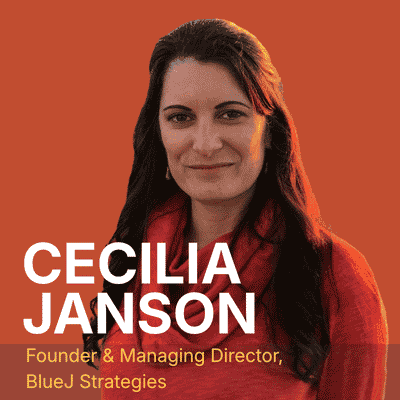
Cecilia Janson, CMB, says most failures start before the vendor is chosen: lenders don't know their actual process or where the gaps are, so they buy technology without knowing what they are solving for. Weak change management and bringing trainers in too late add to the risk. She describes one implementation that took a year to configure and was abandoned within three months.
How can a lender avoid buying a new loan origination system it doesn't need?
Map the operation step by step and list the pain points first. For one client, Cecilia's team identified eight pain points and found that the lender's current provider already solved, or had on its roadmap, seven of them. Fixing the workflow inside the existing system saved the client millions of dollars.
What should lenders do before signing a technology contract in 2027?
Cecilia's three steps: know exactly what you are solving for, back it with data rather than feelings, and understand how your vendor builds, tests, monitors and trains its AI and protects your data. Bring compliance, legal and your technology leaders in before you sign.
What should lenders ask vendors about AI?
Ask how the AI is tested, monitored and trained, how accurate it is and how your data is protected, and make sure the contract covers it. Cecilia shares advice from a tech conference keynote: if a vendor says its AI is 100% accurate, walk away.
Why does change management matter even for small system changes?
A change in layout alone, such as a pricing engine moving the loan amount field, slows loan officers and processors down when they are not prepared. Frustrated users serve borrowers less well and push executives toward unnecessary fixes. Clear, early communication prevents that.
Will AI replace experienced mortgage professionals?
Cecilia expects a human in the loop to remain essential, especially in a regulated industry where governance, monitoring and testing matter. Experience is what lets teams judge what the data and the technology are telling them.
How did Cecilia earn her CMB designation?
After losing her job in the financial crisis without a professional network, she pursued the Certified Mortgage Banker designation to build one. She earned it in 2019 through the MBA's Path to Diversity scholarship, with the support of her employer and her sponsor.
Resources
BlueJ Strategies
mortgagedata.ai
Polygon Research
Mortgage Bankers Association: CMB designation
Chapters
00:00 Intro: Why layering tech without good data fails
01:16 Welcome & meeting Cecilia Janson, CMB
02:12 From loan processor to Director of Operations & closing a bank with the FDIC
09:00 Earning the CMB designation and finding a way past "no"
16:25 Leaving banking to launch BlueJ Strategies
21:18 Where LOS and POS implementations go wrong
30:00 Balancing automation and AI with human experience
34:06 2026 conference highlights & takeaways
36:45 3 steps to take before signing a new technology contract
39:12 Is AI hype or reality? Real-world efficiencies and revenue impact
42:41 "Slow down to speed up": Lowering the cost to originate
Transcript
Intro: Why layering tech without good data fails (00:00)
Cecilia Janson, CMB: You're the Data Queen, so I think you know very clearly that data is absolutely critical in making our decisions. Even in our daily life, you have to have information in order to make decisions. So I do think missing data, disjointed data and not actually understanding what the data is telling you is a big part of our industry's problem.
Especially as young people come in and we have young executives, what they think matters today isn't necessarily going to matter. You need experience. You need somebody who has been around, maybe has a little bit of gray hair, to explain: "The data is telling you this right now, but if the economy changes or the process changes, you're going to experience this problem." Then you can calculate your risk, if you have proper data and you understand it.
We have a lot of issues with implementing technology on top of technology on top of technology, because we don't know what we're even solving for, and we don't have the data behind it.
Welcome & meeting Cecilia Janson, CMB (01:16)
Val Buresch, CMB: Welcome to CMB Connect. I'm Val Buresch, and today my guest is Cecilia Janson, CMB. Cecilia is the founder and managing director of BlueJ Strategies, a Greenville, South Carolina consulting firm that helps banks and mortgage lenders with process improvement, technology selection, implementation and procedure training.
Cecilia and I go a long way back with the CMB Society. We are part of the same group, the CMB Technology Committee. So I'm really excited to talk about her story and to learn about mortgage banking and technology from her experience. Cecilia, welcome to the CMB Connect podcast.
Cecilia Janson, CMB: Good morning. Thank you so much for having me, Val. I'm so glad to be here.
From loan processor to Director of Operations & closing a bank with the FDIC (02:12)
Val Buresch, CMB: Tell us a little about yourself. Your story is incredible. You went from loan processor to director of operations in about four years. That's a stratospheric ascent. What did you learn in processing that still shapes your consulting today?
Cecilia Janson, CMB: Thanks, Val. That was a big jump, going from loan processor to director of mortgage operations for a small de novo bank in Charleston, South Carolina. I actually helped start the bank. There were six of us, and I was on the mortgage side as the loan processor. As the bank grew, I became the director of operations, and we had a team of about six people. It was a ton of fun, and I learned a lot. It was right before the crisis.
The bank did not make it, unfortunately, but I learned so much through that. I ended up working for the FDIC over the summer to close the bank. I had been there for about eight years. Then I moved into an operation, also in Charleston, working for a woman who used to be my consultant. Early in my career I had three women who were consultants for me, and I knew I wanted to be like them when I grew up. That's how I got here.
What I learned from loan processing is that you have to have cat-like reflexes at all times. You have to put your thumb on every single file every single day to offer the best customer experience you can. I loved it. And I found that skill translates very well into project management, which I got into later in my career with system implementation.
Val Buresch, CMB: What I didn't know is that you stayed and helped close the bank, working with the FDIC staff. What did that involve, and how did it feel?
Cecilia Janson, CMB: Honestly, it felt really sad and painful. I helped start that bank, and we were there for seven years. It was beautiful. My husband works in historical restoration. He painted the inside of the bank to make it look old, and he painted the vault doors. I had a lot of personal feelings about that organization, and I was in my mid-twenties. It was a very unusual experience for somebody that young.
Working with the FDIC was very interesting. The questions they asked me as the operations director in my mid-twenties were a little intimidating, but they were so kind. What happened was not my fault. It wasn't any one person's fault. It was a series of unfortunate events that none of us could have predicted. It was such a valuable time, but it was painful to shut those doors.
But when one door closes, another one opens. I got to work for the woman who had been my consultant, and she taught me a world of information. It was incredible working directly for her in my next role, at South State Bank.
Val Buresch, CMB: Was the bank you worked for absorbed by South State?
Cecilia Janson, CMB: It was actually acquired by First Citizens Bank, another community bank that's still here in the South doing wonderful things. I still have lots of friends there. I'm super proud that they're still here and thriving.
Val Buresch, CMB: Do you remember what brought the bank down? Was it mortgage loan performance, or something else, like a mismatch between deposit growth and a portfolio of long-term assets like mortgages?
Cecilia Janson, CMB: There are lots of newspaper articles about it. It was a myriad of things. We had the mortgage division, and we sold everything into the secondary market. If we couldn't sell a loan into the secondary market, it would go into the bank's portfolio. Those loans were probably riskier than should have been put on the books at that time. We probably should not have loaded up the portfolio with some of those riskier loans.
We were also a very young organization. The president, the CEO and some of the executive team were in their early thirties. We could have benefited from a little more gray hair and experience. A group of really great people came down from Fifth Third to try to help save it, and I learned so much from them. I'm still good friends with three of them. It was a valuable lesson, and I met some incredible people, but a number of things took the bank out in the long run.
Val Buresch, CMB: Sometimes even gray hair cannot save the situation. I was at Bank of America when the great financial crisis happened, and a bank I worked for before that, ShoreBank in Chicago, failed, even though it was run by very experienced, very good professionals. Sometimes you cannot overcome years of strategy that meet the current moment in an unfortunate confluence of events.
Earning the CMB designation and finding a way past "no" (09:00)
Val Buresch, CMB: Let's move on to South State. You had a long career there, and you earned your CMB in 2019. Why did you decide to do that, and what did it change for you, both in how your executives saw you as a business professional and in how you saw yourself?
Cecilia Janson, CMB: At the first bank, I was becoming a young professional and learning who I was in this industry. We were not a member of the Mortgage Bankers Association. I did not have a network. It was a very small group.
When the crisis happened, I lost my job. Charleston isn't a big financial district with a lot of mortgage operations, and operations was my specialty. So for about a year I wasn't working full time. I took small jobs, helping a CPA friend balance books, helping a restaurant, just to keep my brain fresh.
Then I started at South State with the woman who had been one of my consultants. She brought me in to help with process management: understanding where the gaps were in the mortgage operation and how to fix them. But I still didn't have a big network outside that small group. I did not want to be in a position where I couldn't work again if we had another crisis, or if I lost my job through a merger or acquisition, which happens all the time.
So I thought it was important at that point in my career to expand my network and find like-minded people who would challenge me to be better than I thought I could be. I found the Certified Mortgage Banker designation and thought, "I want to do that. I want to be part of that society."
So I started studying and working out how to get there. Do I have the classes and education? Am I participating in enough events and conferences to earn the points? Do I have a sponsor? What can I do to be as prepared as possible? I fought really hard to get through it, and I earned my CMB through what was then the Path to Diversity scholarship.
As a young woman in banking, I didn't get a lot of yeses. I often faced some no's. And if you know me well, I don't really like the word no. I will find a way. If you're not going to give me a yes, I'll find a way to get to yes myself. That scholarship was invaluable to me, because it allowed me to earn my CMB on my own, with the support of my organization and a great sponsor.
How did being a CMB change me? I'm night and day. I feel like a different person. I now have incredible conversations with people like you, Deb Jones, Tammie Gravlee and Nolan Turner, people who are so talented. You know the saying that you don't want to be the smartest person in the room? I often feel that way, and I think, this is great. I'm not the smartest person in the room, which means I have so much to learn. I absorb as much as I can so I can become better and serve my clients better.
Val Buresch, CMB: As they say, iron sharpens iron.
Cecilia Janson, CMB: Yes. There are no words to explain what it means to be part of the society, to chair one of the committees, to lead a group of people toward a common cause and advocate for our industry. It means so much.
Val Buresch, CMB: Something about your experience really resonates with me: you don't accept no for an answer. There's always another way. You took charge of your own professional development because you knew it mattered for your career, for your team and now for your clients. That's a good lesson for any young person, and specifically for women: take responsibility for your own development and keep raising the bar for yourself. You raise it for everyone else and for the industry too, especially now as things change so fast.
Cecilia Janson, CMB: Absolutely. For women in general, and for any young person, if you're being told no, throttled or pushed to the side while you're trying to grow, you have to push through. I also have an incredible village of supporters. My family and my husband always stand right behind me and say, "Keep going. Don't accept it. How can I help?" That support system was a big part of it, because I didn't have my network or the CMB Society yet. My husband might as well be a CMB, as much as we studied together.
Val Buresch, CMB: So many other people could be CMBs.
Cecilia Janson, CMB: It's a family affair.
Leaving banking to launch BlueJ Strategies (16:25)
Val Buresch, CMB: After you earned your CMB, you left the bank. You left a vice president role, a very good position at a depository institution, and started your own firm. What made you take such a bold leap, and what surprised you once you did?
Cecilia Janson, CMB: In financial services, there are lots of mergers and acquisitions. I had about nine years there, and through succession planning I was in line for executive leadership. Then an acquisition took place, and there was already an incredible young executive team at the acquiring organization. They said very nice things and were supportive, but I could see the path to executive leadership wasn't going to be as wide open as before.
I could stay on that path, or I could take a big leap of faith. My husband is a serial entrepreneur, and he's always pushing. I am very much not a risk taker. For the most part, I follow the rules. So it was a hard decision.
At the same time, my husband decided to retire from historical restoration and open a seafood market in the mountains of South Carolina. So we both quit our jobs, packed the car and moved back to my hometown of Greenville, South Carolina. I opened my consulting firm, and he opened his seafood market. It was right after COVID, and it was a scary time, but taking that leap of faith together was a lot of fun. Both businesses are doing great, but good gracious, it was like drinking from a fire hose.
Val Buresch, CMB: Are you helping each other's businesses?
Cecilia Janson, CMB: Very much so. He helps me a lot with ideas and marketing. He's very creative and visual, and he helps me think outside the box when I'm stuck. I'm more of an A-to-Z, follow-the-path person, so I help his operations with management, bookkeeping and pre-ordering. Some of my team members at BlueJ help with that too, so I consider him one of our best clients. It's different from mortgage, and it's fun.
Val Buresch, CMB: What a great story. What is the name of your husband's business?
Cecilia Janson, CMB: It's a shrimp supply company. He sells direct to consumers, but he really enjoys working with the chefs at some incredible restaurants here in town and supplying their shrimp every week. He supports the docks and the fishermen, advocates for sustainable aquaculture and taking care of our oceans, and supplies fresh shrimp to restaurants. It's a lot of fun, and we eat very well.
Val Buresch, CMB: I love seafood. My son is a marine biologist in Wilmington, North Carolina. And in my own business, when I describe mortgage market intelligence, I love using fish analogies: where the fish are.
Cecilia Janson, CMB: That's funny. Absolutely.
Where LOS and POS implementations go wrong (21:18)
Val Buresch, CMB: Let's dive into your experience implementing loan origination systems and point-of-sale platforms. When lenders pick a new LOS or POS, where does it usually go wrong? Is it vendor selection, implementation, or the technical skills and buy-in of the team?
Cecilia Janson, CMB: All of the above. It can go wrong at every point you described. What I see most is that we don't know what our actual process is or where the breaks and gaps are. We have feelings about things, or heartburn around them, or we hear a lot of chatter, and suddenly we have to fix things. It goes wrong right there: not understanding what we're actually solving for.
I like to sit down and understand the entire process. Where are the pain points? What's causing heartburn at the end of every day? If you have processors going home crying, why? Let's find out and solve for that.
Adoption is also a big thing: communicating with the people who will work with the technology. Change is really hard for people. You have to start change management early, even at vendor selection: "We're shopping for this." And you need to understand the pain points, so that when you talk to vendors you can ask, "Does your system do X, Y or Z?" because that's the problem you're solving.
I was on an implementation project at a bank that went through a merger of equals. One of the banks was already far down the path of selecting a vendor and configuring the system, and at the merger they decided both banks would move onto that new system. Mergers are already hard. You have two organizations that both have to change. Then you put a whole new loan origination system on top of them. It was too hard, and people didn't understand the why. There were also problems with the system and the configuration. As much as you test, you can't test every scenario. Maybe new technology will help with that one day, but it didn't exist then.
They launched after about a year of configuration and implementation work, and it failed within three months. They ripped off the band-aid and went right back to their legacy loan origination system. I learned then that a lot can go wrong much earlier, and somebody needs to raise their hand about it.
The other thing I see a lot is that trainers aren't involved early in decision-making and configuration. They don't get the product until the very end, so they can't explain well enough to end users what changed and why their day is going to be better. We need to equip trainers better and bring them in earlier, because they know the pain points. Trainers constantly hear, "Can you train on this?" But it's not always a training problem. Sometimes it's a management problem, a people problem or a technology problem. Training isn't always the answer, but it does need to come into the process earlier.
My other story is about understanding what's going on. A client wanted to buy a new loan origination system. We started with why: what are the pain points? We landed on eight, the "great eight." While we went through demos with new LOS providers, we also talked to their current provider. It turned out the current provider had about seven of those eight either already solved or on its roadmap.
Some of the heartburn was simply operational know-how. The technology was there, but they didn't know it, maybe because they missed it in a release or it was a small item in a release. Going through that selection process, we walked through their entire operation step by step, from processing to servicing. We knew their workflow, found their gaps and solved for them inside their current technology instead of buying a new one. It saved them millions of dollars. It was an incredible project, and it happened because they stepped back and focused on what was going on, understanding their process and fixing it, instead of buying new technology that said it could do everything.
So it comes down to understanding what's going on within your operation.
Val Buresch, CMB: It strikes me that the people on the team have to understand. Training has to happen ahead of time, probably all the time. In your second story, the vendor had the features, but they were either on the roadmap or the client wasn't using them. Because mortgage banking, regulation and technology are so complex, there should be someone in the middle, like a trainer or a firm like yours, constantly translating between the business people and the LOS and POS vendors.
Cecilia Janson, CMB: Yes. We have to think about our end users. Recently, a company's pricing engine changed. Not the functionality, just the visual experience. It seems like no big deal, because the functionality didn't change. I call it changing colors: it went from purple to blue. But that really upsets end users. The loan amount field was over here, and now it's over there, and that slows them down.
They wake up Monday morning to a new visual experience, and it takes them a minute to get used to it. If they're not prepared and it slows them down, they get frustrated. When they're frustrated, they can't help their borrowers, and helping the consumer is what we're supposed to focus on. Then they complain. And when they complain, we as executives start making bad decisions: "Oh my gosh, let's fix it." There was never anything that needed fixing. We just needed to do a better job communicating what was happening.
It also relies on end users paying attention. When the change management emails or videos come through, watch them. We're trying to help you be faster with the new experience. Letting people know what's going on is a really big deal.
Balancing automation and AI with human experience (30:00)
Val Buresch, CMB: There is a constant push and pull between people and technology. My impression is that you always want to keep teams intact when you bring in new technology. How do you automate a process without losing the experienced staff who know where the bodies are buried? Especially now, as generative AI solutions come out, that tension will become even more pronounced. How do we get better at process and technology without losing the people?
Cecilia Janson, CMB: It's a great question. I'll poorly quote my dear friend Ruth Lee, another CMB. She doesn't believe AI is going to replace her, because our gray hair shows that our experience matters. We have to monitor what's going on with our technology. We have to know what we're building inside it and how the AI, if you're using it, is solving for things. You still need a human in the loop, and you need that brain power to build these things.
Val Buresch, CMB: Sorry to interrupt. Human in the loop is a strong idea whenever we talk about AI. Is it because mortgage banking is so regulated, or is it across industries?
Cecilia Janson, CMB: Possibly across industries. Think about healthcare. If I go to the doctor, I still want to see my human doctor. So in general, I think we'll always need a human in the loop. But what do I know? We'll see in ten or twenty years whether I'm right.
For mortgage specifically, absolutely, because we're regulated. Fannie and Freddie already have their governance written out for what we need to do, and we have to pay attention. We're on the precipice, trying to figure out: what do we do, how do we do it, how do we monitor it, how do we keep records of what we're doing and test it?
There's some really great technology coming. Earlier this year I went to the Mortgage Collaborative's tech conference and summit and saw 15 vendors pitch their technology. The things people are building are fascinating, and they're needed. Our industry has so much promise in what these companies are building. Our co-chair of the Technology Committee is one of them, and I got to stand on stage with her and pitch a product she's developing specifically for testing in our industry. We're not the greatest at testing. If we have technology to help with that, we'll be able to manage our AI and the governance around it, with real documentation and improvement processes. There are incredible things to come, but I imagine we'll always need human experience to create and evolve them.
2026 conference highlights & takeaways (33:53)
Val Buresch, CMB: You mentioned an event. We're now in November, near the end of the year, and most conferences are done. Tell us about your 2026 conference season. What was uplifting, interesting or useful?
Cecilia Janson, CMB: The Mortgage Collaborative's tech conference was my favorite this year for true industry collaboration. It was electrifying. I walked away feeling revived and refreshed.
I went to ACUMA for the first time and moderated a panel of incredibly talented credit union members and consultants. I really enjoyed the energy at ACUMA. It was held in Las Vegas this year, and I took my mom, so we had a mother-daughter trip. ACUMA let my mom come in and watch us, which was really special. That one will always hold a bit of my heart.
I didn't get to go to MBA Annual this year, and I was devastated. I've been to every Annual since I got my CMB, but I had conflicts, and my granddaughter was born shortly before, so I wanted to be around. I'm looking forward to Nashville.
Otherwise, I go to our local monthly chapter meeting, a luncheon with speakers, every month I can. And I went to our state conference, the Mortgage Bankers Association of the Carolinas, which was held in my hometown this year. I got to see a lot of incredible North and South Carolina bankers and mortgage professionals. It's been a busy season. I'm looking forward to advocacy in DC next year. I have family in DC, so I always enjoy seeing my niece, nephew, sister and brother-in-law.
Val Buresch, CMB: That's a great conference, and I don't have to travel for that one.
3 steps to take before signing a new technology contract (36:39)
Val Buresch, CMB: If someone is listening in November and thinking about Q1 and 2027, what are the first three things they should do before signing a contract for new technology? With things changing so fast, this is probably one of the riskiest times for an executive to sign a technology contract.
Cecilia Janson, CMB: Absolutely. First, going back to what we discussed: do you know what you're solving for? Do you understand where your gaps and issues are?
Second, have data behind it, not just feelings. I'm a data person. If you tell me something's broken, I want you to prove to me why it's broken, not just say it feels broken. Let's solve for it with data.
Third, and equally important: understand your vendors. Everybody has AI right now. How are they testing it, monitoring it, training it and building it? How are they protecting your data and your information? If you don't have a solid clause in your contract, and your vendor can't give you solid answers about what they're doing with AI, be hesitant to sign. Have compliance, legal and your smart, talented people behind you, whether that's your CTO or whoever in your organization works with AI and understands it, so you're not signing a contract without understanding what your vendor is doing with your data.
At that tech conference, the keynote speaker said that if you ask a vendor how accurate their AI is, and they say 100%, you need to run right out the door, because that's impossible right now. I thought that was great advice. Ask your vendors the hard questions now. Either they'll have the answer or they'll be honest with you, and you want that honesty.
Is AI hype or reality? Real-world efficiencies and revenue impact (39:12)
Val Buresch, CMB: AI is everywhere in our conversations. Is it hype or real? And if it's real, where is the biggest impact so far: cost savings, operational efficiency for processors, underwriters and closers, or revenue on the sales side?
Cecilia Janson, CMB: All of the above again. There are cost savings, as long as you do your due diligence upfront on the contract so you're not bleeding money on technology that won't do what you need. I see efficiencies every day, from people using it to set up and answer emails. I heard you on the CMB Technology Committee talk about using an agent to sift through your emails and tell you what you need to work on. What a huge efficiency gain.
I can also see it generating revenue. I just closed a home equity line with a national lender, and it was 100% AI-driven. Because I'm in the industry, I understood the application. As a typical consumer, I might have skinned my knees a little. What fascinated me is that every question I emailed got an instant response with clear, accurate information. It was hard to tell it wasn't a human.
In South Carolina we close with an attorney. The loan had a rescission period, and the attorney gave me three questions to ask before it ended. I sent those three questions at 8:44 that evening, and I had a response at 8:44. That's the only way I knew it was AI: it was that quick. A human couldn't have responded that fast, that professionally, with all the accurate answers. I saved it to my file.
So there's some really great stuff out there for the consumer, and I think it will generate revenue. If you can get your processes that quick, you're generating revenue for sure.
Val Buresch, CMB: That's what I was thinking: the impact compounds. It saves time, and it lets the revenue flow faster.
Cecilia Janson, CMB: So, all of the above: cost savings, revenue, efficiencies. It's there, as long as we implement it properly.
"Slow down to speed up": Lowering the cost to originate (42:41)
Val Buresch, CMB: Cecilia, is the mortgage industry's real problem technology, as some people think? Or do we keep layering technology on broken processes and on outdated, disjointed and sometimes wrong data?
Cecilia Janson, CMB: Yes, yes, yes. You're the Data Queen, so you know very clearly that data is absolutely critical to our decisions. Missing data, disjointed data and not understanding what the data is telling you are a big part of our industry's problem. We need experience to explain what the data is telling us now and what will happen if the economy or the process changes. Then you can calculate your risk.
We keep implementing technology on top of technology because we don't know what we're solving for and we don't have the data behind it. Sometimes we try to move too fast. An old boss and mentor of mine used to say, and we use it in my family too: sometimes you have to slow down to speed up.
I apply that often in decision-making. I step back, understand what's going on, think about the risks, play the adversary and ask what could break. Then I make a decision with calculated risk. Nothing is ever perfect. We can only make decisions with the information we have in the moment, and adjust when new information comes tomorrow. Our industry as a whole would benefit from that concept.
Val Buresch, CMB: That's why I love what you do. You're the consultant who advises lenders to slow down and think through the problem before jumping on the next shiny object. Technology vendors are often venture-capital driven, and venture capital drives innovation. But is that solution right for that particular lender? You work with people, you explain, train and evaluate. You're doing a great service to lenders.
Cecilia Janson, CMB: Thank you. I enjoy it. I don't like going in and saying, "Let's just buy that technology and implement it." It's not about the paycheck. It's about our industry and how we better serve borrowers and homeowners. Earlier in my career I impacted homeownership directly. Now I impact it indirectly, and I want to find ways to drive the cost down for the consumer, not up because we decided we needed another technology solution. I really want to see the cost per loan go down.
Val Buresch, CMB: I'm with you. We introduce technology solutions over and over, and the cost keeps going up. What's going on?
Cecilia Janson, CMB: Yes. My daughter just bought her first home, and I'm so fortunate for that. But I fear that eventually homeownership won't be available to young first-time buyers. I want to see that cost go down so it stays sustainable for a very long time.
I especially like working with smaller organizations that don't have the budget to bring in large consulting firms with teams of people, and helping keep their costs down. It's really meaningful. I end up wanting to be part of their team. That's what I miss most about working inside a bank, having a whole team. So my clients become my new team members.
Val Buresch, CMB: That's beautiful. I sometimes feel the same way, which is why the CMB Society and our committee are so important to me.
Cecilia Janson, CMB: Yes, absolutely.
Closing (47:53)
Val Buresch, CMB: Cecilia, thank you so much for sharing your wisdom and experience with us. I especially loved your CMB journey story.
Listeners, you can find Cecilia at BlueJ Strategies, solutionsbluej.com. If you've thought about starting your CMB journey, now you have the nudge. Do what Cecilia and all the wonderful CMBs did. Reach out to us, reach out to Cecilia, and if you have questions about the CMB designation, go to mba.org. And don't forget to follow and subscribe to CMB Connect. It helps us spread the word about the CMB designation, help each other and make the industry better, just like we discussed today. Thank you, and see you next time.
Cecilia Janson, CMB: Thanks, Val. Thanks for having me. This was an incredible podcast.